IN 3 LINES
- Scared by Squares entered Steam Early Access on November 3, 2026, taking players inside a prison constructed from cubes.
- Compared with POOLS and The Exit 8, its distinctive proposition is to make players act on an anomaly after noticing it.
- The interesting question is how broken visual rules change what players trust. A compelling premise, however, still has to become a convincing experience.
Could a curved patch of wall make you stop in your tracks?
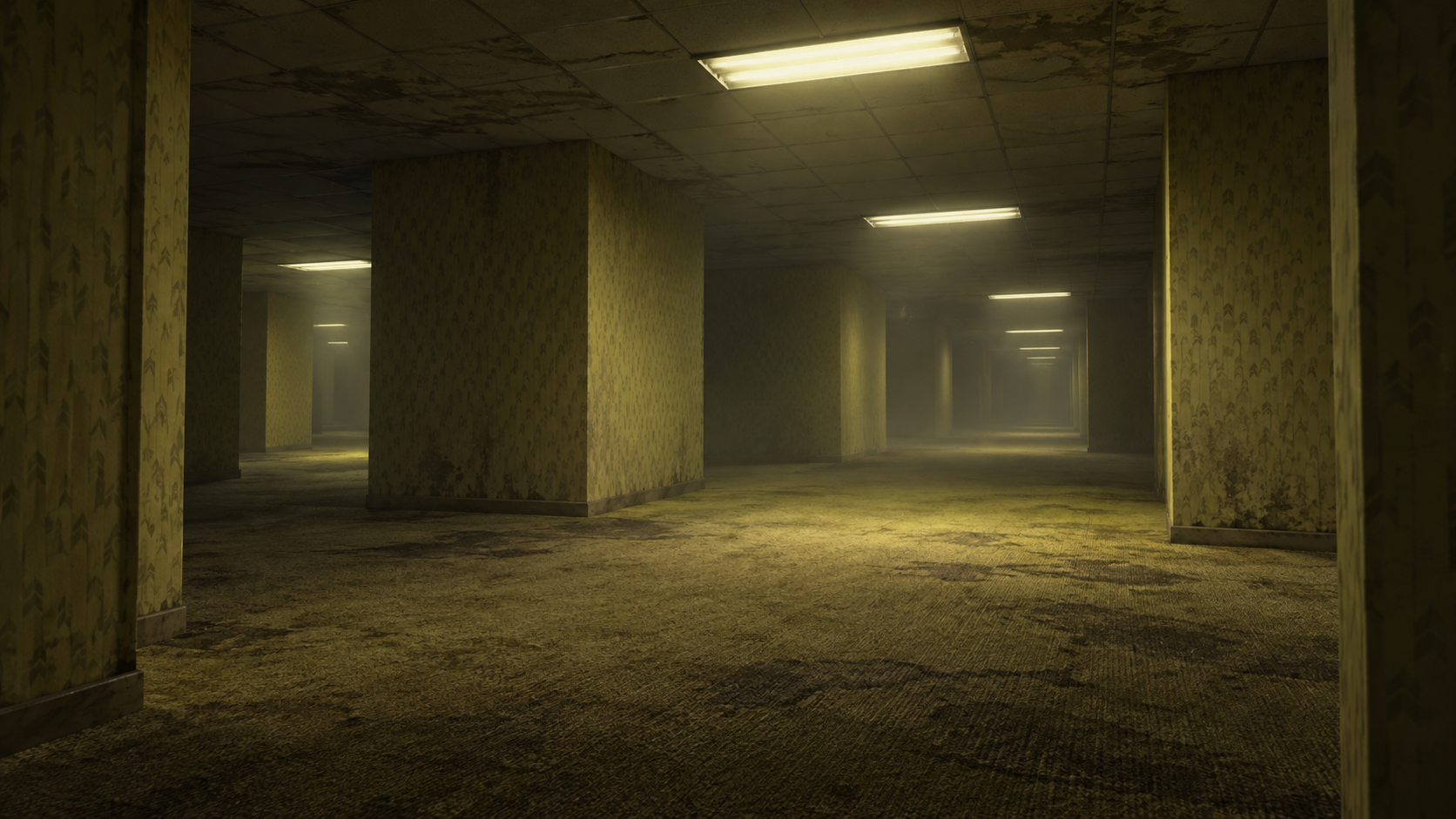
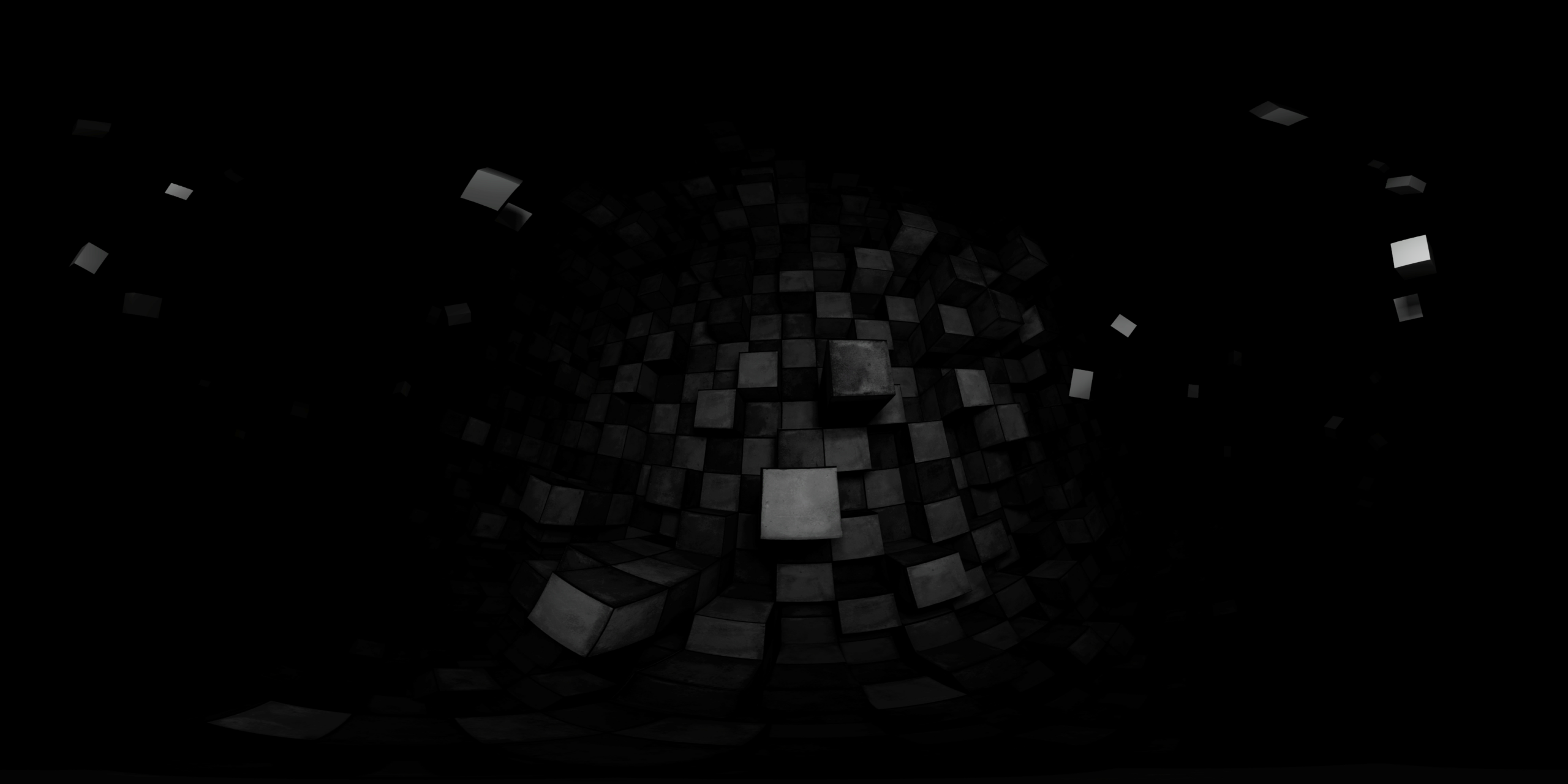
In an ordinary building, it would be unremarkable. In a place where you have learned that everything must be square, it becomes evidence that something is wrong. The unsettling possibility is not that a shape possesses some special power. It is that the rules you used to understand a place have stopped working.
That is the idea worth examining in Siege Industries’ Scared by Squares, which entered Steam Early Access on November 3. The cube is an effective pitch, but it does not explain what the game might do differently—or where that approach could fail.
When one curve becomes an event
On the official website, developer CJ describes a visual constraint built around cubes, with tension coming from space, sound and uncertainty. The setting is The Cube, a failing digital prison built to contain the shape-shifting Shaper. The player is a prisoner sent inside it.
The useful implication is that a visual style can become a rule the player learns. In a richly decorated room, a small change may disappear into the detail. In a stripped-down environment, one inconsistent form can become conspicuous. Removing information can make the remaining information more significant.
That is a design opportunity rather than proof that the finished scenes work. The environment must first teach us what to notice. If rooms are merely hard to distinguish, uncertainty can become an exhausting navigation problem instead of a disturbing question about our memory.
The balance is delicate: enough familiarity to establish an expectation, enough variation to make us doubt it. The most promising moment would be the hesitation between “that changed” and “perhaps I remembered it incorrectly.” A simple visual language leaves little room to hide an unclear one.
POOLS, The Exit 8, and the move from noticing to acting
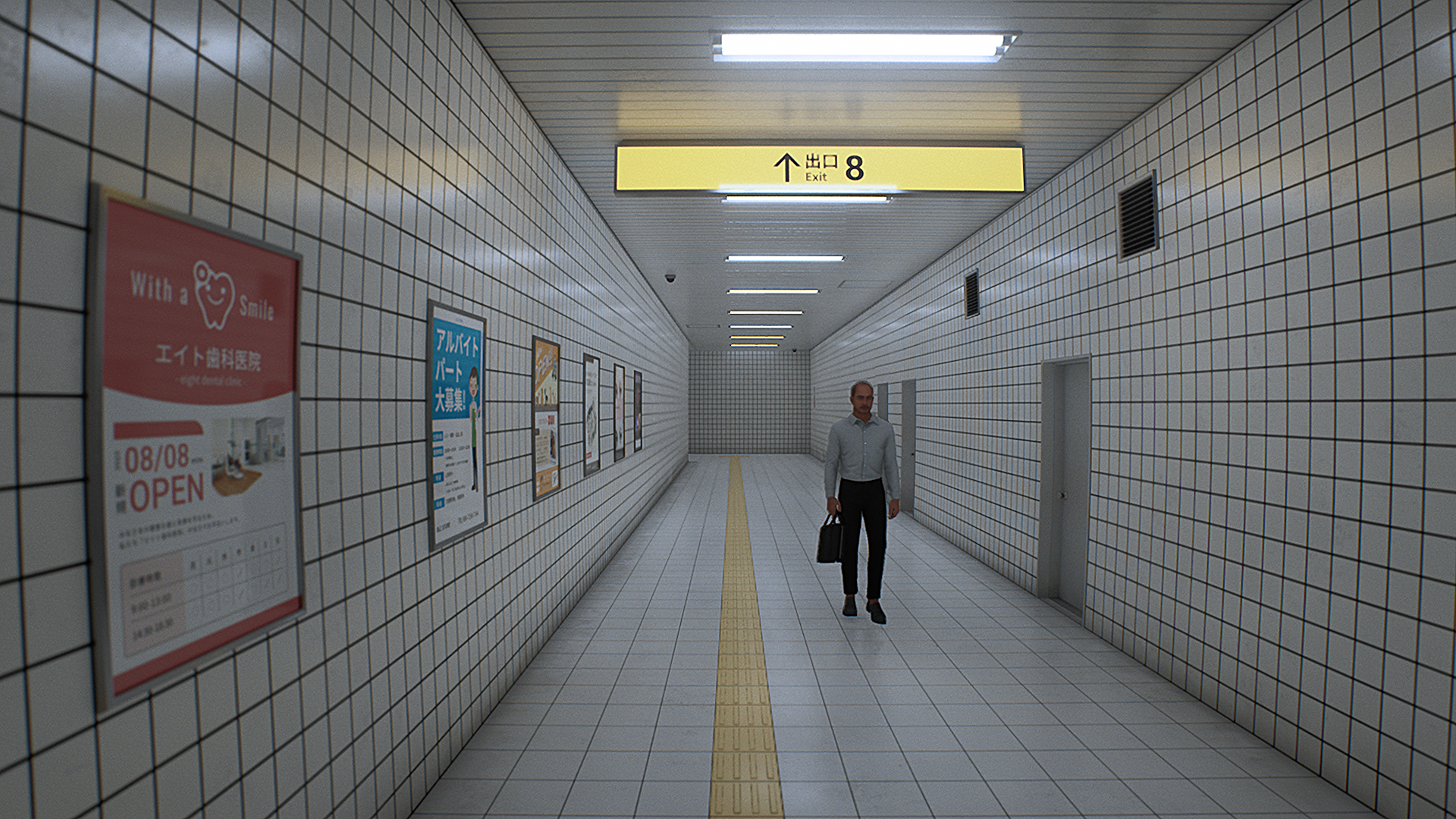
Other games already make apparently ordinary places unsettling. Comparing what they ask us to do is more revealing than grouping them together by their empty corridors.
| Game | What its official description emphasizes | The design question it suggests |
|---|---|---|
| POOLS | Walking, looking and listening, without pursuing monsters | How uncomfortable can simply occupying a place become? |
| The Exit 8 | Observing anomalies and turning back when one appears | How much can you trust your judgment of a familiar scene? |
| Scared by Squares | Finding and cleansing anomalies, alongside puzzles and combat | Can responding to an abnormality be frightening too? |
The first two descriptions come from the official POOLS and The Exit 8 listings. The questions in the final column are our interpretation, not claims of a documented influence between the games.
Intervention changes the stakes of observation. At a distance, an oddity is something to think about. Having to approach and address it makes that judgment consequential: is it really abnormal, and is moving closer the right response?
Yet a reliable response can also make a threat reassuring. Once you know what to do, a disturbing encounter may turn into a checklist. The challenge is to give players understandable actions while retaining uncertainty about the place around them. Neither arbitrary surprises nor completely routine solutions would resolve that tension on its own.
Whose definition of “normal” are you enforcing?
The official setting describes failing geometry and a narrator whose calmness feels suspicious. A 2025 announcement from Clique Games also raises questions about the Cleaners’ assignment and what the prison’s overseers conceal.
Together, the setting and the player’s job suggest a more interesting possibility than a cleaning mechanic alone. If you are instructed to remove whatever does not belong, you are relying on someone else’s definition of what belongs. An authority that labels something abnormal is not automatically a trustworthy one.
This is a reading of the premise, not knowledge of a hidden ending. Its potential lies in connecting the puzzle to the story. Learning to spot inconsistencies could also make the player question the rules used to identify them. If those doubts affect how the next room is understood, narrative and interaction reinforce each other.
If they never matter to the player’s actions, however, mysterious narration remains background decoration. The opportunity is to move from “this world is wrong” toward “what makes me so certain that my instructions are right?” Whether the game makes that move remains something to investigate.
Four players change more than the difficulty
The Steam edition supports solo play, online co-op for up to four, and both monitor and VR play. Those options do not guarantee that tension survives every combination.
Alone, you have no one to confirm what you remember seeing. In a group, other people can share tasks and warn you about danger. A familiar voice can puncture the isolation before any puzzle is solved.
But shared navigation also creates the possibility of conflicting testimony. One person insists the group has already passed a corner; another remembers a different room. In an environment built from repeated forms, describing a location may be harder than everyone expects. Cooperation could become a way of questioning each other’s memories as well as solving a problem.
We have not verified that Scared by Squares implements such scenes. This is a useful question to bring to a cooperative spatial-horror game: do companions simply supply the answers, or does trying to agree on what happened create a new kind of uncertainty?
VR poses a related tradeoff. Reading a corner on a monitor and approaching it with an embodied sense of distance may feel different. But an effect that amplifies unease must still leave the environment legible and the controls comfortable. In a game about interpreting shapes, darkness and disorientation cannot excuse an inability to understand the task.
The test is whether the same room means something different later
The developer describes the current Steam build as two floors of roughly 25–30 minutes each. It includes combat, so expecting an entirely threat-free architectural walk would be misleading.
There is also an important date distinction. Clique’s October 9, 2025 announcement concerns Meta Quest Early Access. It is not the November 2026 Steam launch, and its old roadmap should not be mistaken for a current Steam specification.
A promising concept is different from successful execution. For a compact spatial game, the revealing question is whether understanding changes how a familiar room feels. Does a second encounter reveal something you could not read before, or does learning the procedure remove everything interesting?
Three questions would guide a closer look at the demo and subsequent updates:
- Is discovering an anomaly understandable? Observation should explain the discovery, rather than a lucky guess.
- Does tension survive the response? Cleansing and combat need to avoid becoming chores between more interesting moments.
- Do story and action connect? Questions about the world should change how the next room, or the player’s assignment, is understood.
A cube is not a magical frightening object. Its potential advantage is that a simple world can make an inconsistency unusually difficult to ignore.
What we want to see from Scared by Squares is not how many frightening objects it can add, but whether it can make an apparently empty square corridor impossible to trust again.
Official information and comparison sources
- Scared by Squares: Steam listing and current Early Access description
- CJ’s official website and setting
- Clique Games: October 9, 2025 Meta Quest announcement
- POOLS: official Steam listing
- The Exit 8: official Steam listing
Sources rechecked November 10, 2026. This is reporting and analysis of public primary material, not a hands-on review. The comparisons and design possibilities are our interpretation; unverified mechanics and story outcomes are not presented as established facts.