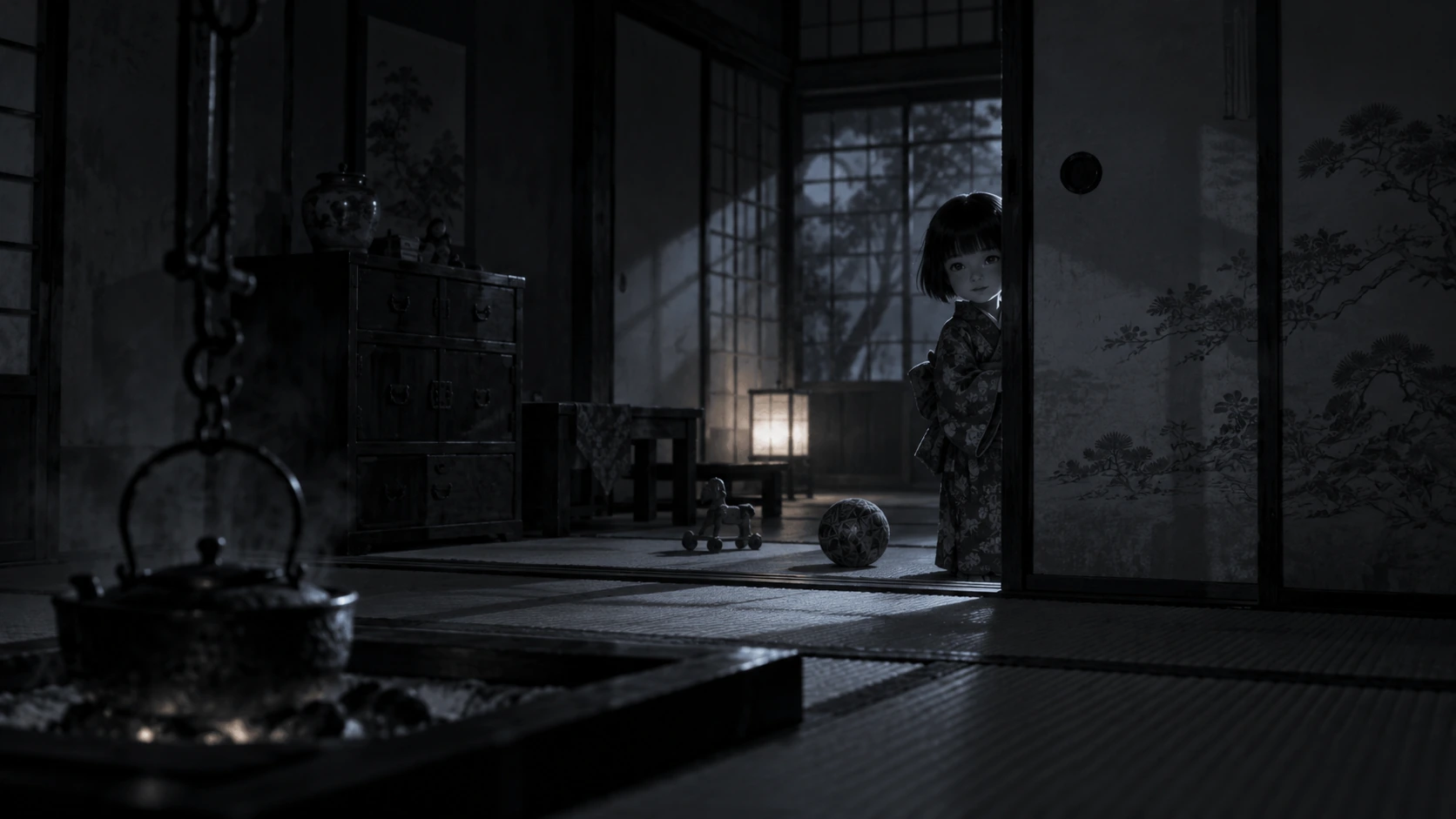
MIRA’S RESEARCH RECORD / HASSHAKU-SAMA
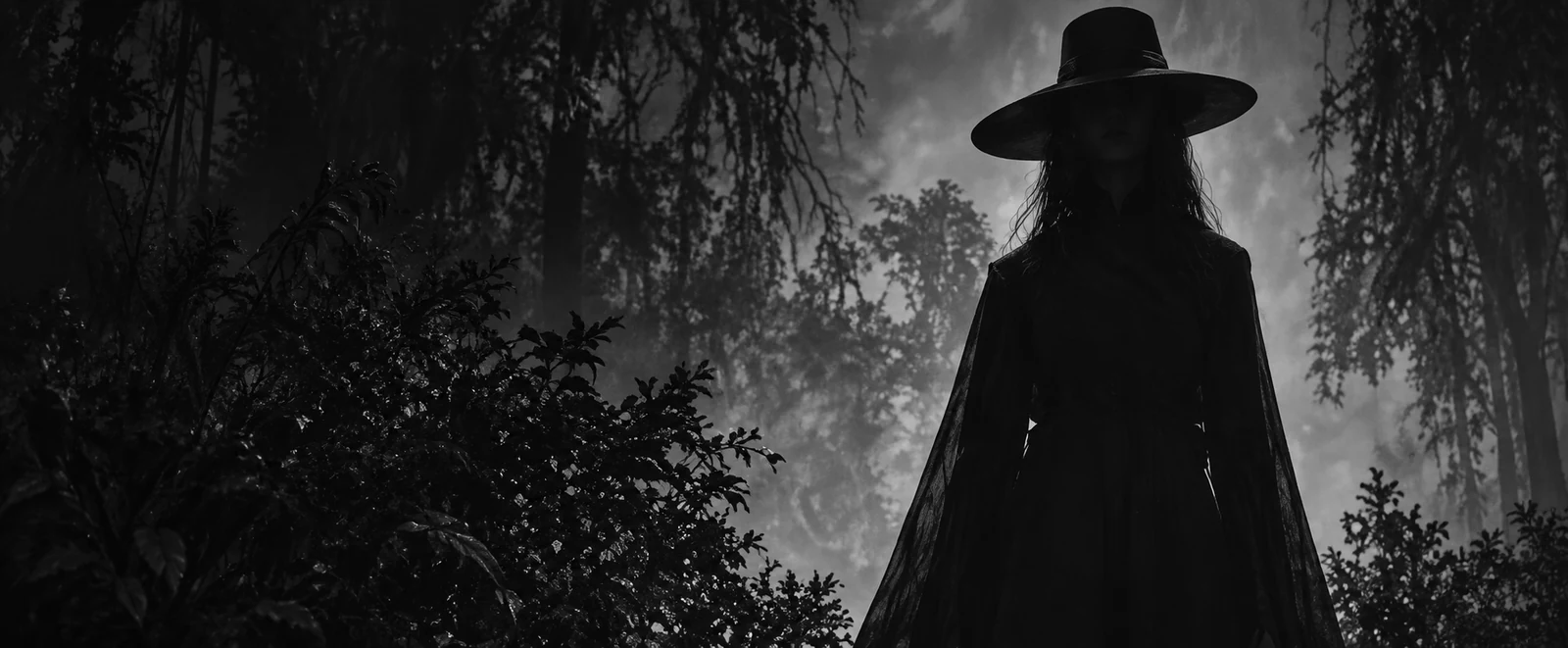
An impossibly tall woman and a strange voice
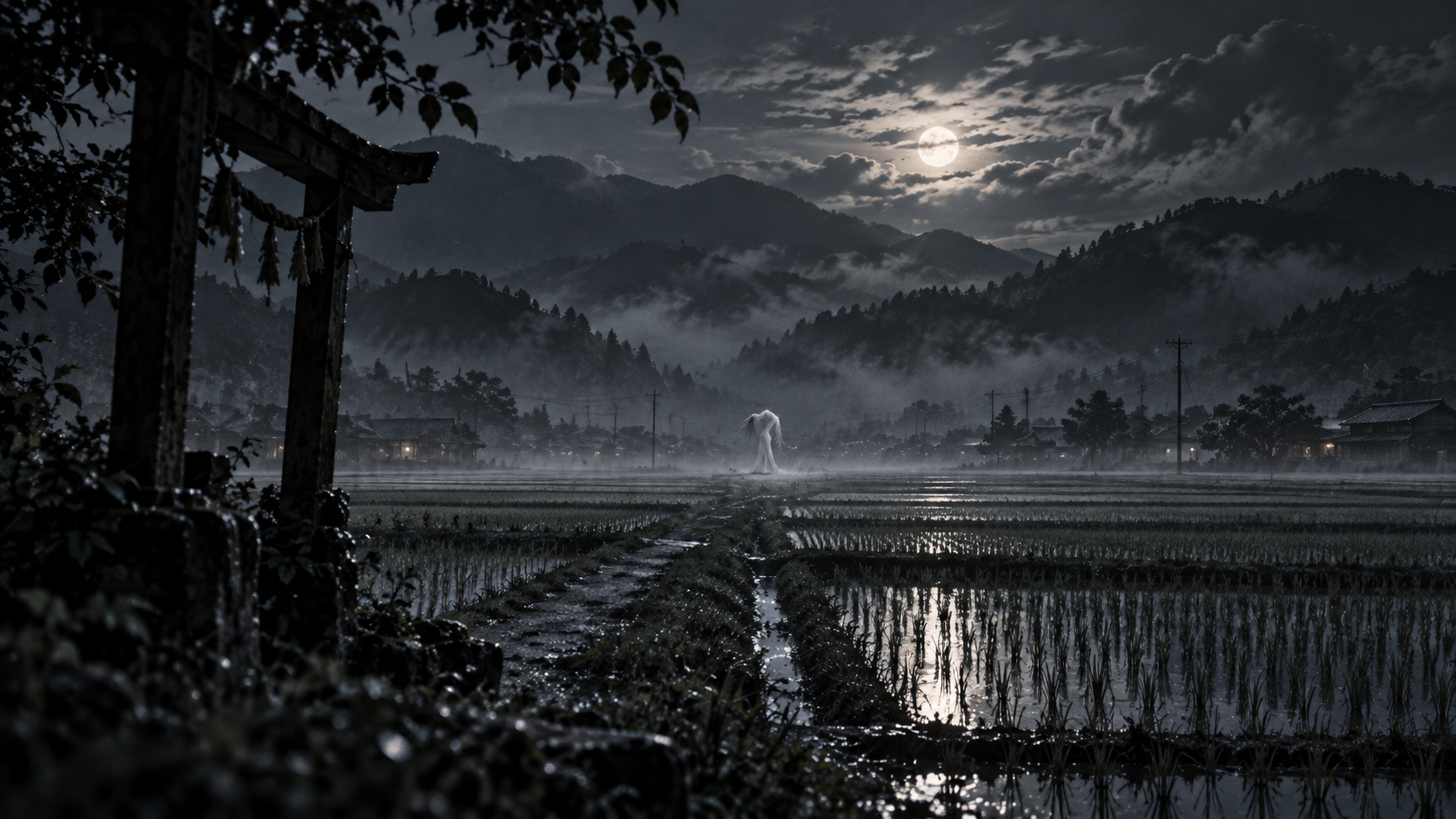
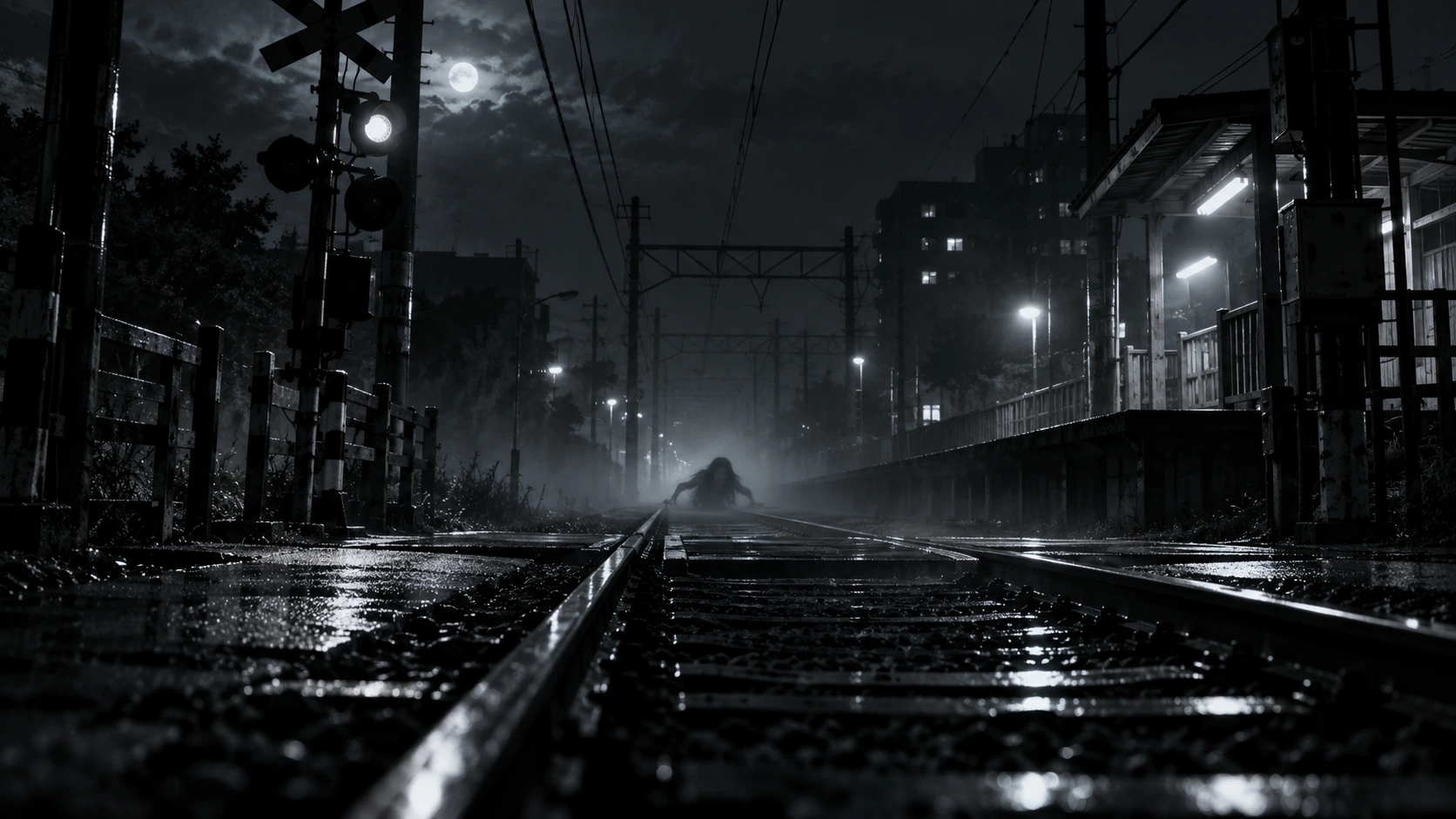
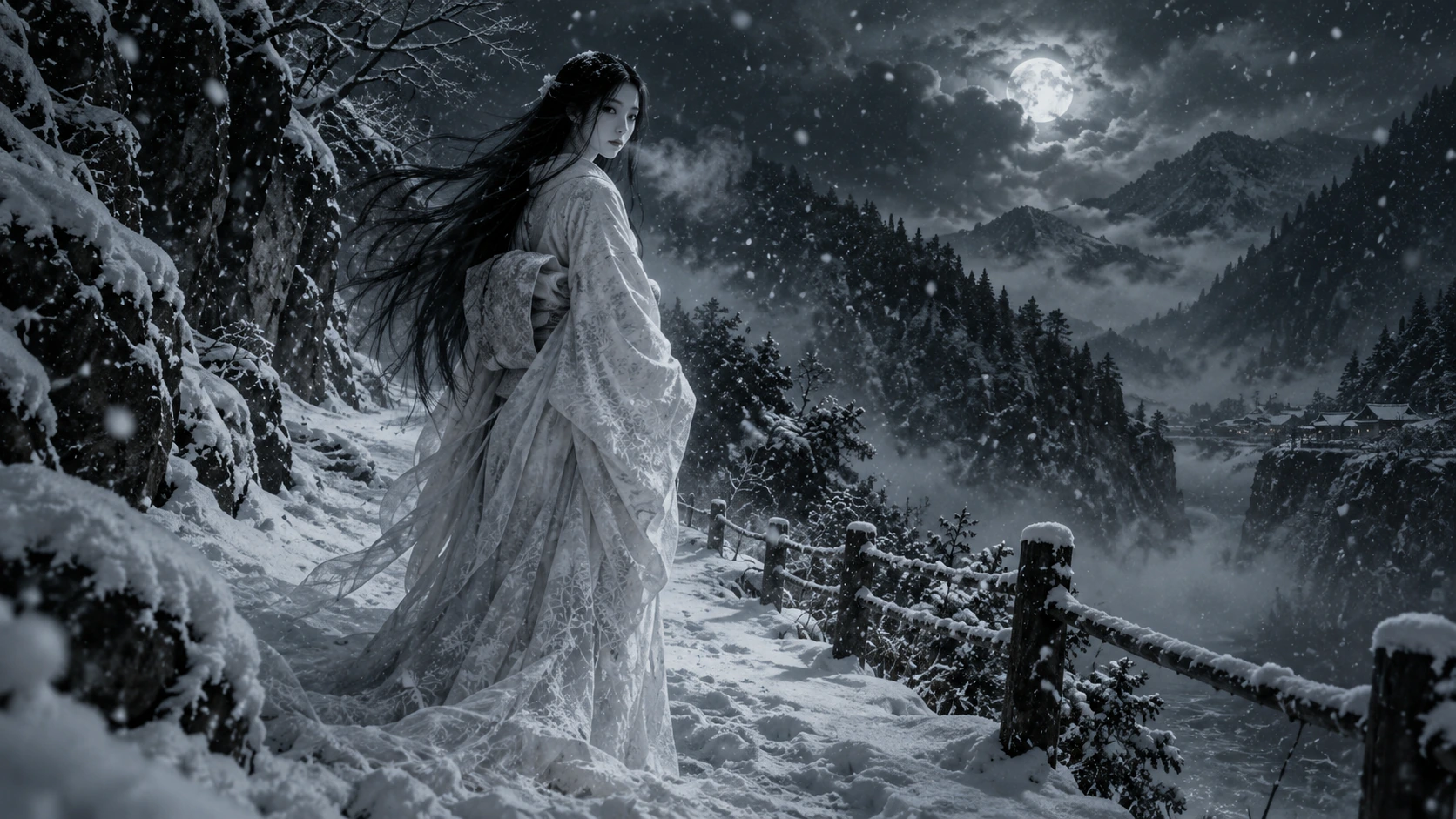
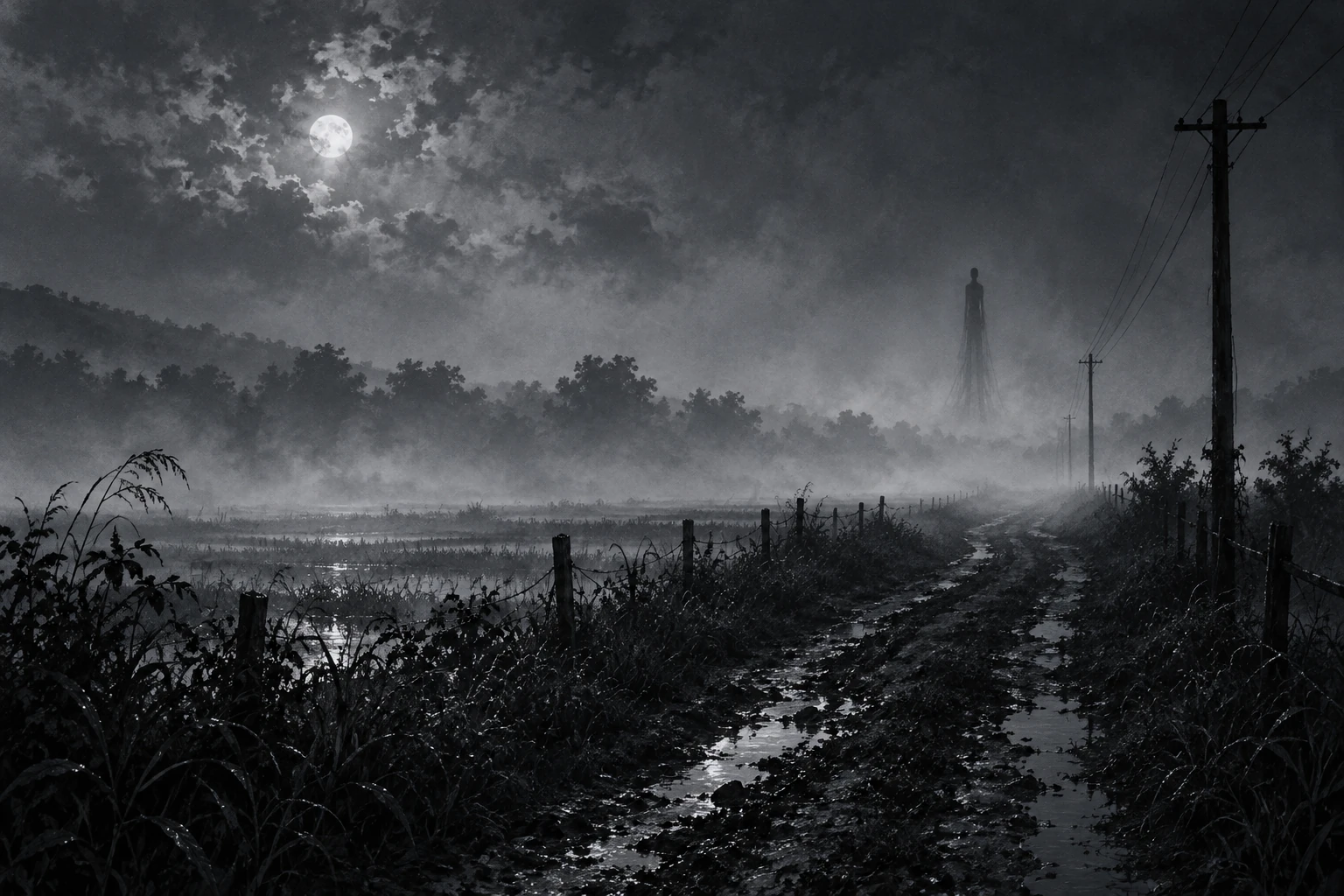
A woman appears, far taller than a human ought to be.
She approaches, making a strange sound.
Her name is Hasshaku-sama.
It is a ghost story that became widely known on the Japanese internet.
A tall woman in pale clothing, a hat, an unmistakable laugh. That may be the image some readers have in mind.
But when I looked through the surviving records of the story, something caught my attention.
Was every part of the Hasshaku-sama we know today there from the beginning?
And who established that she was “eight shaku” tall? How?
This time, I compared the text preserved from a 2008 message board with records of how people discussed Hasshaku-sama afterward.
Nine posts dated August 26, 2008
The main source for this investigation is an archived thread from the internet message board 2channel.
Its title is “Shinu hodo share ni naranai kowai hanashi o atsumete minai? 196”—roughly, “Shall we collect stories too frightening to laugh off?”
A thread is a single conversation in which users post about the same topic.
In the past logs now displayed by 5ch, or 5channel, the Hasshaku-sama story is preserved in 9 instalments, posts 908 through 916.
Post numbers are sequential numbers assigned to entries within a thread.
The archive displays timestamps running from 09:45:56 to 09:54:54 on August 26, 2008.
Every post displays the same ID.
So a single long story was posted over roughly 9 minutes.
That does not mean the events in the story took place within those 9 minutes.
The account looks back on events said to have happened years earlier.
The instructions at the start of the thread also welcome fiction alongside personal experiences.
That does not, by itself, mean this poster explicitly called the story fiction.
What we can establish for now is that 9 posts containing this account survive in the archive.
“Eight shaku” is not a measurement in the text
The first thing that interested me was the number in the name.
Shaku is a traditional Japanese unit of length; 1 shaku is approximately 30.3 centimetres.
Eight shaku comes to about 2.42 metres.
That is very tall indeed.
But the preserved text contains no scene in which the poster measures the woman’s height.
Instead, the narrator describes a hedge roughly 2 metres high in the grandparents’ garden, and the woman visible beyond it.
Her extraordinary height is conveyed through a comparison with a familiar object.
The name Hasshaku-sama, and the explanation of her height, come from the grandmother within the story.
In other words, within the text, the alleged witness’s description and the grandmother’s explanation are separate pieces of information.
That distinction matters more than it might seem.
Hearing the name alone, it is easy to imagine a monster with a precisely specified height.
But the original text combines a description that conveys scale with a name passed on within the story. It is not a measurement record.
At first, I thought the number itself was what mattered.
Reading again, I became interested in how the text leads us to that number, too.
Does Hasshaku-sama always wear the same clothes?
For appearance, I separated the narrator’s description from the grandmother’s explanation within the story.
The narrator’s first description includes a hat and a pale dress.
The grandmother’s explanation allows different ages and clothing, including mourning dress, kimono, and work clothes.
These are different accounts within one preserved text, not independent eyewitness testimonies.
Beginning with an image familiar from later illustrations makes it tempting to supply a uniform outfit the text never established. I needed to reread that part too.
This source alone does not fix Hasshaku-sama to one outfit.
Is that sound “po” or “bo”?
For the voice, too, I want to distinguish the speaker and the kind of record.
The narrator’s written sound is ambiguous about whether the consonant is voiced or unvoiced.
The grandmother in the story describes something resembling a man’s laugh.
A description of a voice resembling someone familiar also occurs later in the preserved text.
These are written descriptions, not audio evidence. I have not tested a recording’s pitch or timbre.
Reading the words aloud means making choices where the text remains ambiguous. A synthetic voice may make different choices again.
…The voices in a ghost story we read are sounding inside our own heads, aren’t they? I should not treat that sound and a later video as though they were the same original source.
Researchers have noticed the voice, too
There is, in fact, research devoted to this subject.
Issue 75 of the newsletter of the Society for Folk-Narrative Research of Japan introduces a presentation by 古野敬一 on Hasshaku-sama’s vocal expression at its 2024 conference.
The report was written by researcher Ryuhei Hirota.
It introduces work on video-site tellings of Hasshaku-sama, including human narration and synthetic voices.
What interests me is the approach: examining not just the story’s setting and details, but how the apparition is made to sound.
However, what I could read was only the short conference report.
I have not yet read the research paper by 古野敬一 itself.
So I cannot state precisely which videos were compared, how the comparison was conducted, or what conclusions it reached.
Even so, the importance of the voice to Hasshaku-sama, and its reinterpretation across media, seem worth investigating further.
Were there tall apparitions before Hasshaku-sama?
By this point, another question arises: did Hasshaku-sama come from an older tradition?
One related record concerns an apparition called nobiagari.
Nichibunken’s Database of Folktales of Strange Phenomena and Yōkai contains an entry for a nobiagari account drawn from a source published in 1976.
It describes an apparition that appears to grow larger as one looks up at it.
I have not read the original source. For now, the comparison is limited to Nichibunken’s database summary.
Since height matters in both accounts, it seems a possible point of comparison.
Researcher Ryohei Ito did publish a 2013 paper titled “『のびあがり』と『八尺様』―電承説話の身体と妖怪” (“Nobiagari and Hasshaku-sama: Bodies and Yōkai in Electronically Transmitted Narratives,” a descriptive translation).
The Japanese term denshō setsuwa, written here with the character for electricity, is a research term for stories transmitted through electronic media such as the internet.
But I have only been able to confirm the paper’s bibliographic information. I have not obtained its text.
I cannot explain Ito’s conclusions on the basis of the title alone.
Still less can I conclude that nobiagari was Hasshaku-sama’s direct prototype.
Finding similar apparitions and proving a connection between them are different things.
…This is one of those points where I really want to read the paper.
By later in 2008, readers were connecting her with another story
Another preserved record matters when considering how readers received Hasshaku-sama.
It is a thread titled “Yavai yatsu ni sōgū 3-ninme”—roughly, “Encountered someone dangerous, third thread”—displaying the date October 25, 2008.
It contains posts comparing another apparition’s story with the already familiar features of Hasshaku-sama.
There is also a link to a page collecting the Hasshaku-sama story.
At least within that archive display, the name was being used to classify and compare other frightening stories.
That is a slightly different stage from the original posting.
Someone posts a ghost story.
Someone else reads it and looks for similarities with another account.
In that process, interpretations absent from the original text can come to be treated as features of Hasshaku-sama.
For example, later posts include speculation about the conditions determining who becomes a victim.
But that speculation cannot simply be added to the original story as an established rule.
Perhaps the image of Hasshaku-sama took shape through later readers’ comparisons as well as through the posted text itself.
Is today’s Hasshaku-sama the same as the one in the 2008 text?
Today, Hasshaku-sama’s name appears in a variety of works.
The anime Otherside Picnic, for example, has an episode titled “八尺様サバイバル” (“Hasshaku-sama Survival,” a descriptive translation).
The name “Hasshaku-sama” also appears in an overseas-facing introduction to the novels.
Such records show that she has become a subject for creative works beyond a single message-board ghost story.
However, I mainly checked official descriptions of those works.
I have not closely compared the novels or the footage, so identifying which work added or changed which details remains a task for later.
It is also still uncertain whether independent records using the same name existed before 2008.
For now, what we can do is compare the 2008 posts with their later reception.
Where this investigation leaves us
Using the 2008 archive as the main source, I examined Hasshaku-sama’s height, appearance, voice, and later reception.
Eight shaku can be converted to approximately 2.4 metres.
But the original text does not describe an actual measurement of the apparition’s height.
It gives several descriptions of her clothing, and we need to distinguish the written voice from later audio renditions.
Later message-board posts also show readers comparing another story with her features.
I began by wanting to find out when and where that extraordinarily tall woman appeared.
As I read, though, another question began to interest me.
Which records shaped the Hasshaku-sama we picture in our minds?
The original posts? Other users’ interpretations? Later illustrations and screen versions?
We need more sources to separate those layers.
…I know that eight shaku comes to about 2.4 metres, but I still don’t have a clear picture of the apparition.
She is proving rather difficult to pin down.
Main references
- Archive display of “Shinu hodo share ni naranai kowai hanashi o atsumete minai? 196” (posts 908–916)
- Archive display of “Yavai yatsu ni sōgū 3-ninme”
- Shaku-to-metre conversion table published by Japan’s Ministry of Agriculture, Forestry and Fisheries
- Nichibunken’s nobiagari record
- Bibliographic record for Ryohei Ito’s paper on nobiagari and Hasshaku-sama
- Society for Folk-Narrative Research of Japan newsletter, issue 75
- Official Otherside Picnic anime website
Research limits: This article distinguishes source records, reported stories and hypotheses. Unread originals and unverified archive provenance are identified in the text. It does not authenticate an apparition or the events in a story.