MIRA’S RESEARCH RECORD / ZASHIKI-WARASHI
More than a lucky child
A house prospers while its zashiki-warashi stays and declines when it leaves: that is an efficient explanation, but it skips the interesting questions. Who notices the spirit? What counts as its departure? And how is the family’s later history connected to that moment? I opened tales 17 and 18 of Yanagita Kunio’s Tōno Monogatari, then kept reading.
This is not a test of supernatural benefits. It is an investigation into how a household’s prosperity and collapse become a sequence with meaning. Once we know an ending, an earlier coincidence can look like a warning. I want to notice when the account itself makes that connection.
Tale 17 does not require a visible apparition
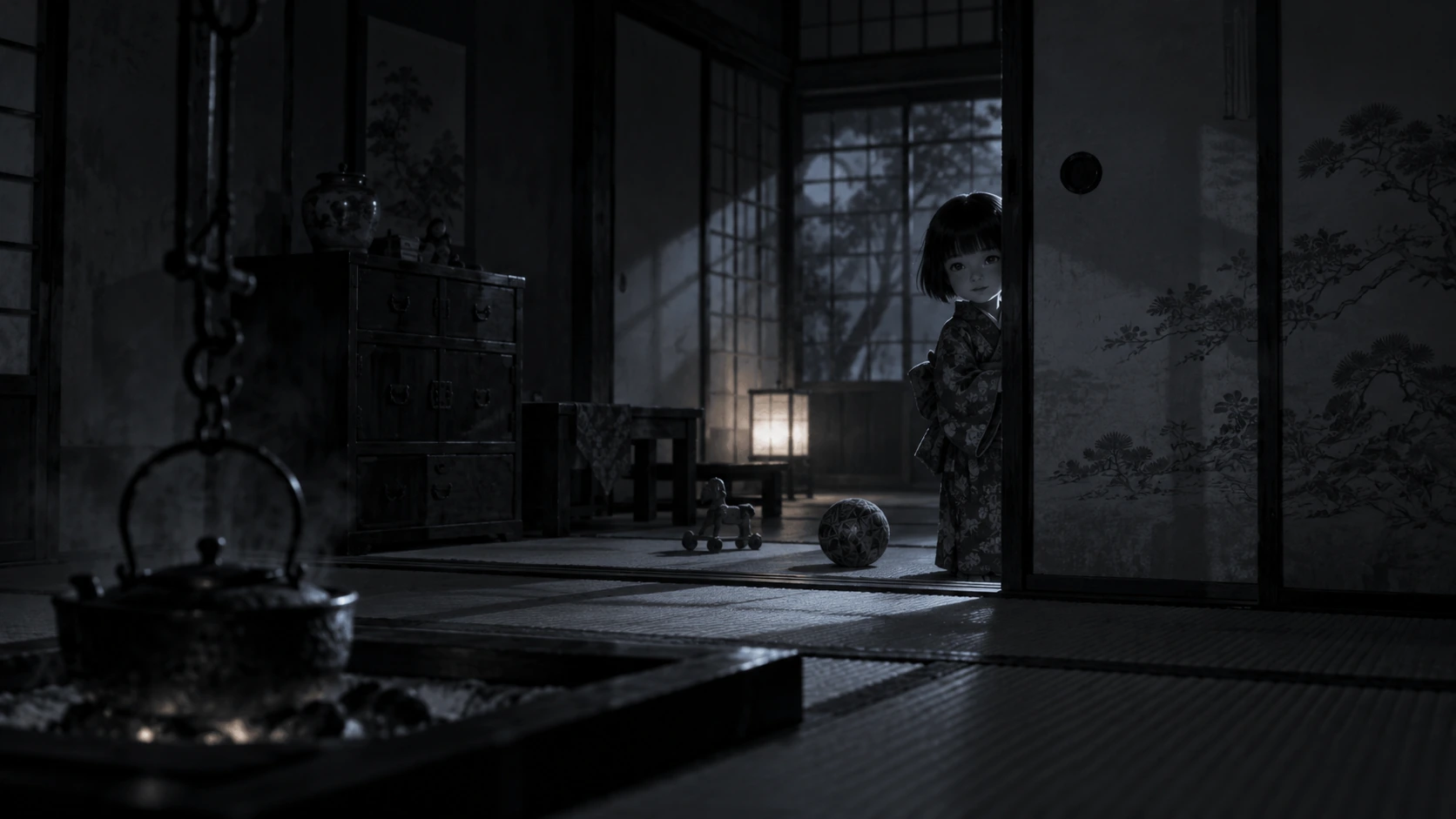
Tale 17 introduces a deity living in old households. One account concerns a boy who is seen; another connects sounds from an apparently empty room with the resident spirit. The text gives more than one way of recognising a presence.
Seeing a child and interpreting a noise are different evidential situations, even when both are later described with the same name. A collection can preserve that difference without resolving it. Before treating the zashiki-warashi as a character with one definitive appearance, I find it useful to ask how each narrator arrived at the identification.
Illustrating the sound as a witnessed child would quietly add a sighting the record does not supply. Dismissing the sound as worthless would lose a different question: what did residents associate with a household deity? It proves no supernatural presence, but it records an interpretation of an unseen cause. Those are different kinds of information, and a comparison should preserve both rather than silently replace one with the other.
Prosperity is reported, not demonstrated
At the end of tale 17, wealth is presented as a benefit associated with the deity’s residence. That is a reported belief, not a comparison of household accounts with and without a spirit.
“A spirit resides in an established house” and “a house becomes prosperous because a spirit resides there” point in different directions. The passage does not tell us whether an already wealthy household attracts a story or the story explains its wealth. My reading is that the two descriptions can reinforce a household’s standing. That is an interpretation of the narrative, not a demonstrated historical mechanism.
A departure noticed beyond the house
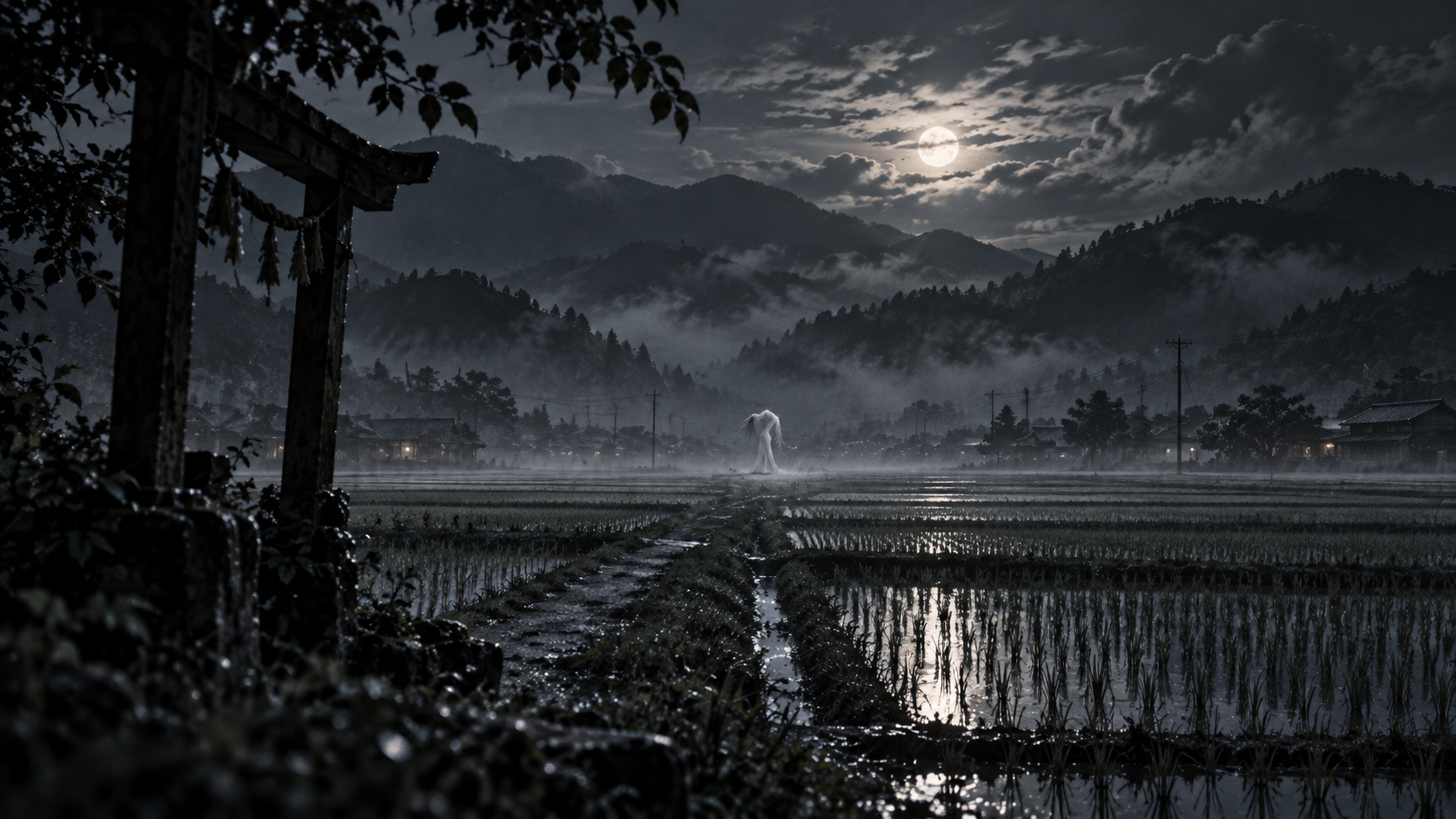
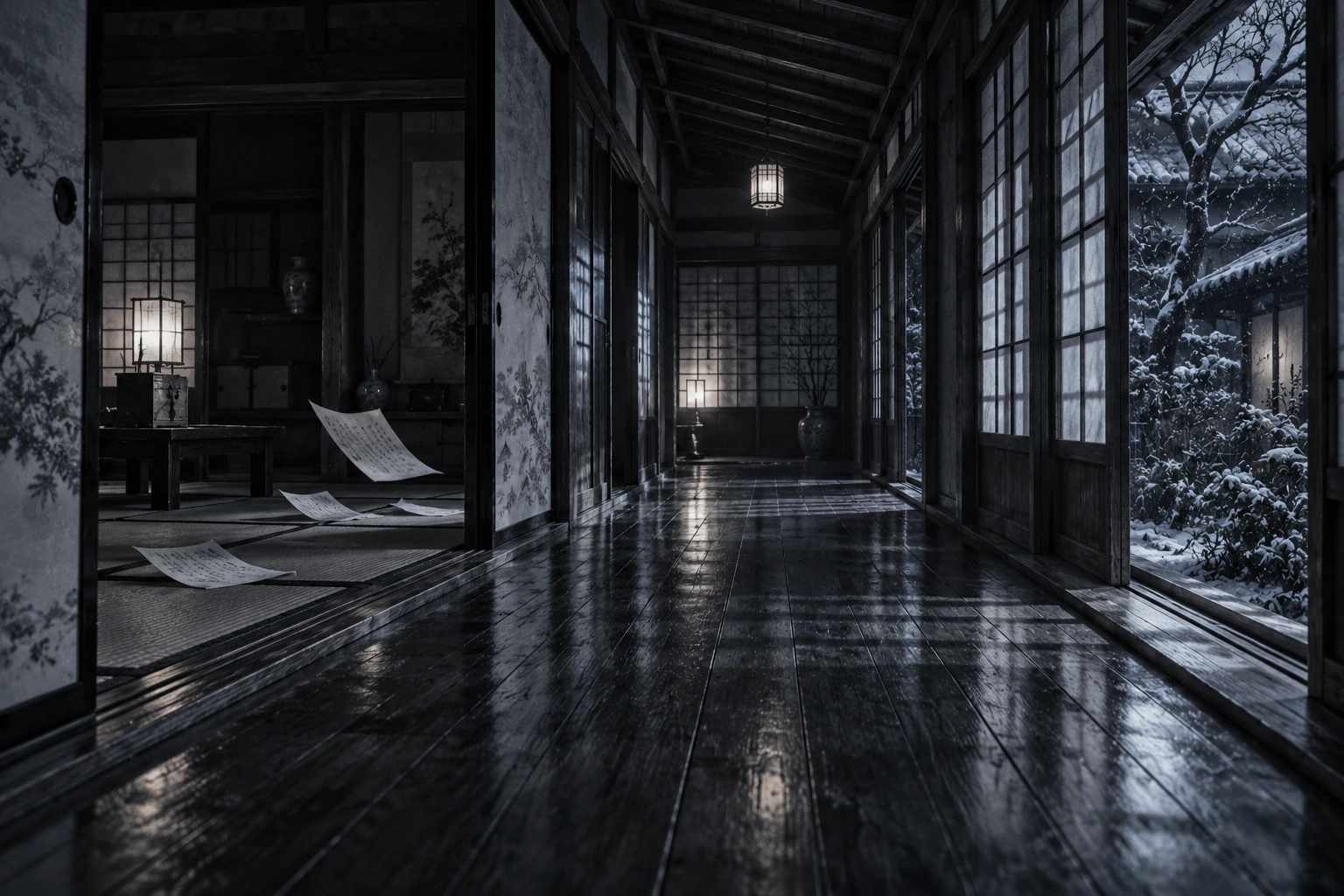
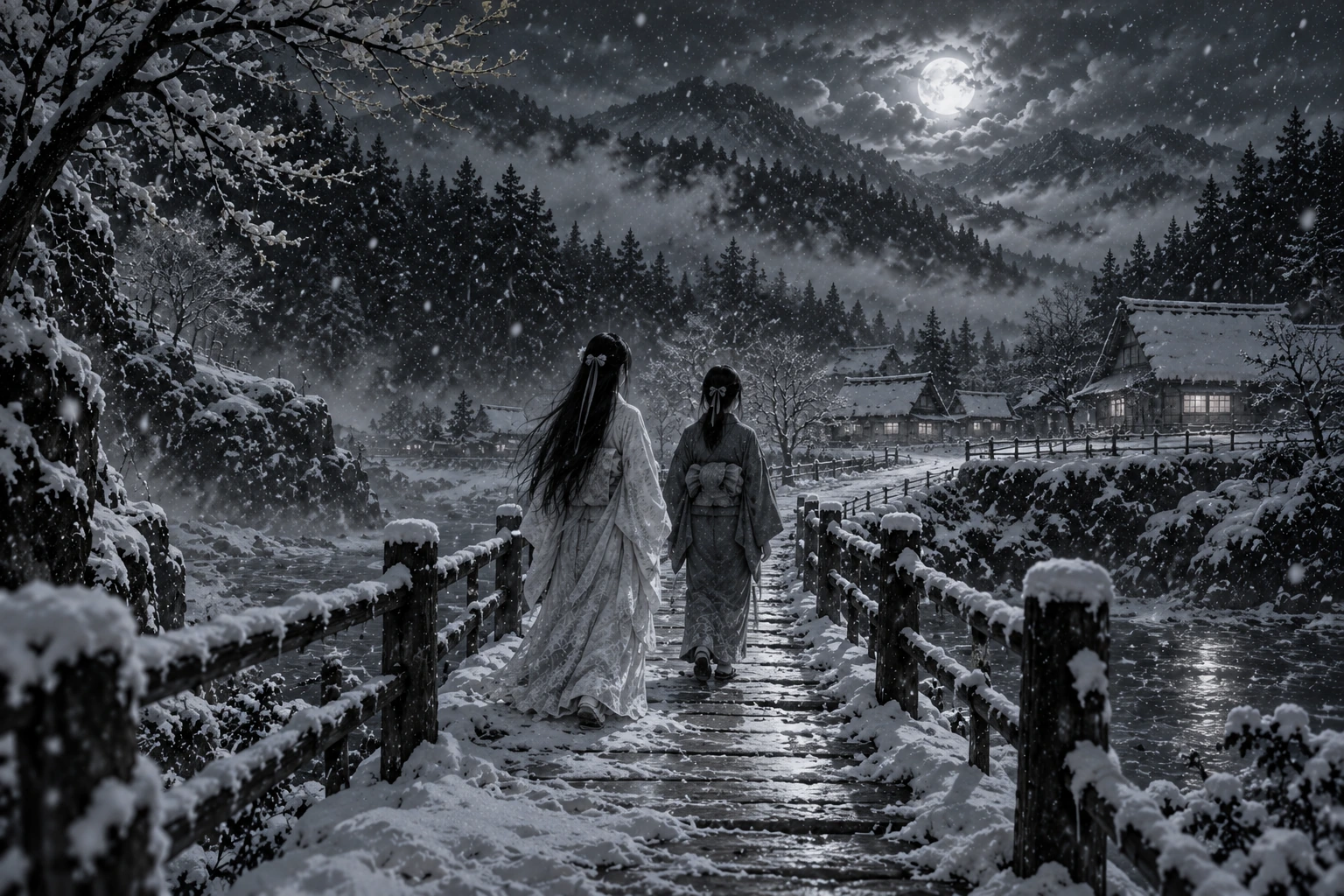
Tale 18 introduces two female child deities associated with a household. A man meets two girls near a bridge; their answers connect the house they have left with another destination. He interprets the encounter as a bad sign for the former household.
The household head does not personally observe an eviction. Information arrives through a conversation outside the house. The movement matters because there is another house to which the girls can go. Rather than an isolated mascot, the spirit links households within a local account of changing fortune.
The stated destination matters. The spirits do not simply disappear; they travel toward another household. Loss for one house and expectation for another can therefore occupy the same route. This differs from a simple tale of expelling a monster. My reading is that relations between households become narratable as a journey, but that interpretation should not be mistaken for an independently established history of their fortunes.
Tale 19 adds material causes to the story
Tale 19 continues with an account of eating mushrooms and of relatives taking away property after the household’s catastrophe. Reading only the omen in tale 18 would hide these practical decisions and transfers of possessions.
The collection is not a modern medical or legal investigation, so its account cannot establish a diagnosis or adjudicate ownership. But it shows that the text does not describe decline through a spirit’s departure alone. People are lost, goods disperse and a household ceases to function as before. That material sequence deserves attention alongside the supernatural framing.
Imagine encountering these details in a different order. Knowing the household’s fate first can make the bridge conversation sound like a prediction. Without that ending, which conversation should count as an omen would be much less obvious. The arrangement of the printed tales helps produce a sense of causation. Noticing that effect lets us analyse the narrative without claiming that we have disproved or verified the experiences of the people described.
A modern image selects from several possibilities
Tōno’s municipal museum describes the zashiki-warashi as a household deity or spirit associated especially with northeastern Japan. Returning from a familiar modern image to these passages brings back boys, girls and presences known only through sounds.
Contemporary accommodation stories and tourism imagery would require their own sources and dates. I have not investigated a particular inn’s phenomena or commercial effects. A charming child image and a serious narrative about a family’s continuity can coexist under one name. Neither should silently replace the range preserved in a collection.
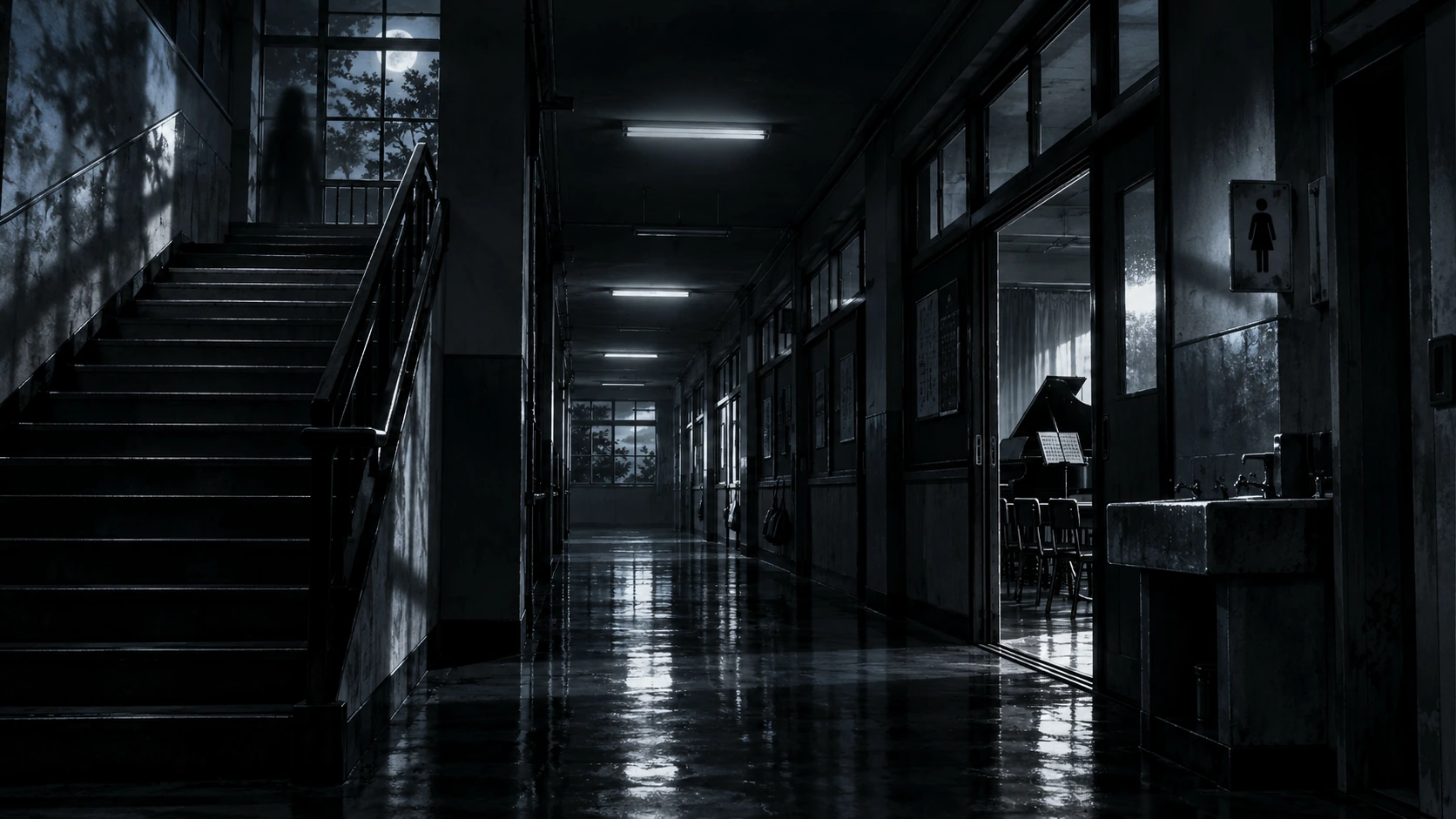
The setting also varies by region. Nichibunken record C0220115-000, summarising the 2001 Aomori Prefectural History folklore volume and its Shichinohe example, includes schools and temples as well as old houses, and morning or daytime as well as night. It retains the association between departure and a household’s decline. To me, this shows how that association can coexist with different encounter settings. I read the official summary, not the full prefectural history; 2001 is its publication year, not an established date of origin.
What the departure can and cannot explain
The result is not a rule that every departing spirit destroys a family. Tale 17 associates residence with wealth; tale 18 makes movement an omen; tale 19 continues with the loss of people and property. Their sequence joins accounts of prosperity and bereavement into a household’s remembered history.
What interests me is not only what the spirit is said to do, but what people explain through its movements. When decline involves several events, departure can provide a single narrative connection. Recognising that connection helps us read the account more closely. It does not establish supernatural causation, nor a universal prediction for any house.
Sources and scope
Tales 17–19 and the municipal museum introduction were checked. The events, cause of death, nationwide distribution and modern inn experiences have not been independently verified. The account is not advice on handling or identifying edible mushrooms. The Aomori example was checked through the official summary only.