NEAR FUTURE PEOPLE | Feature — Games & Internet Culture | Draft: November 2, 2026
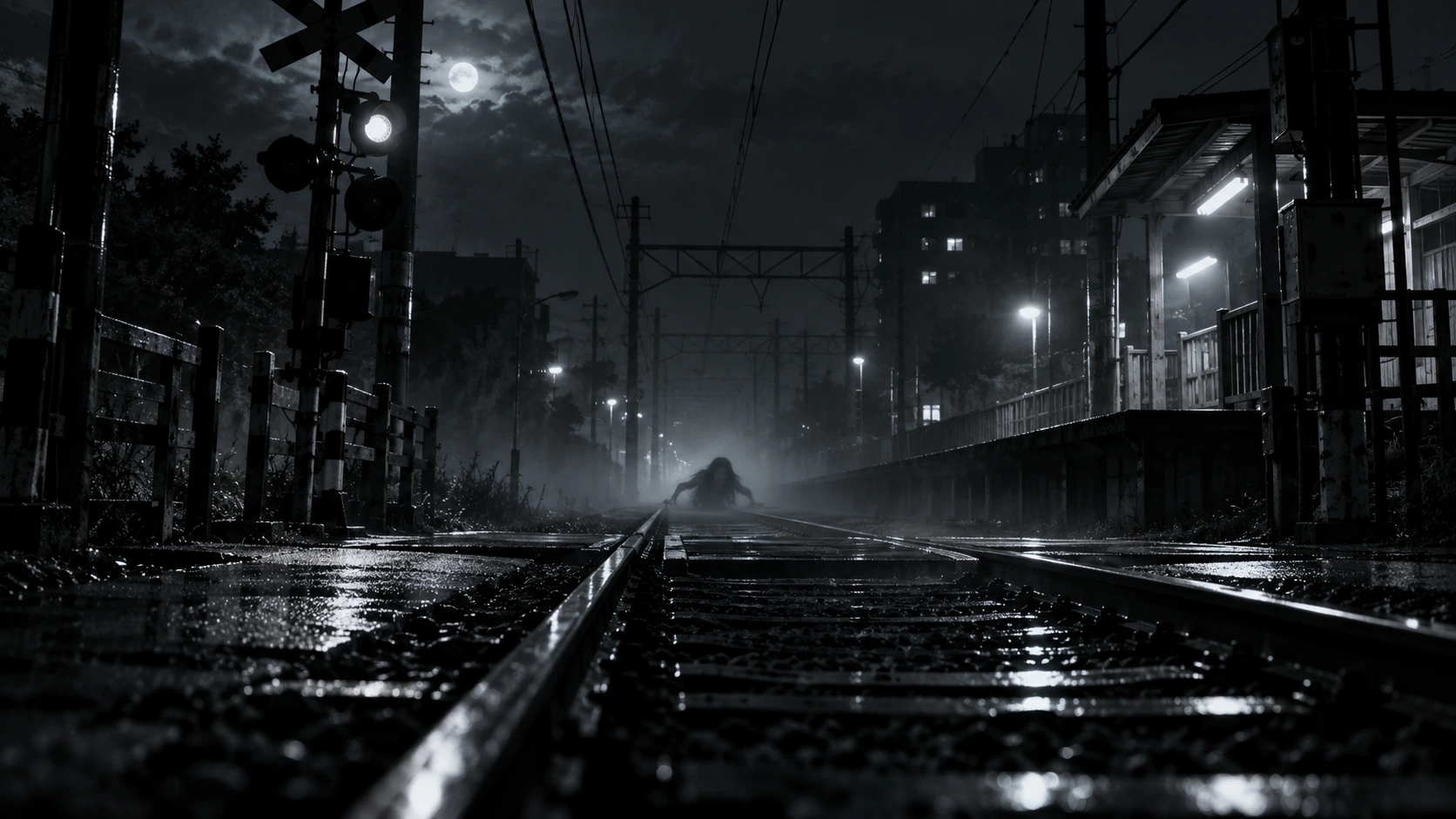
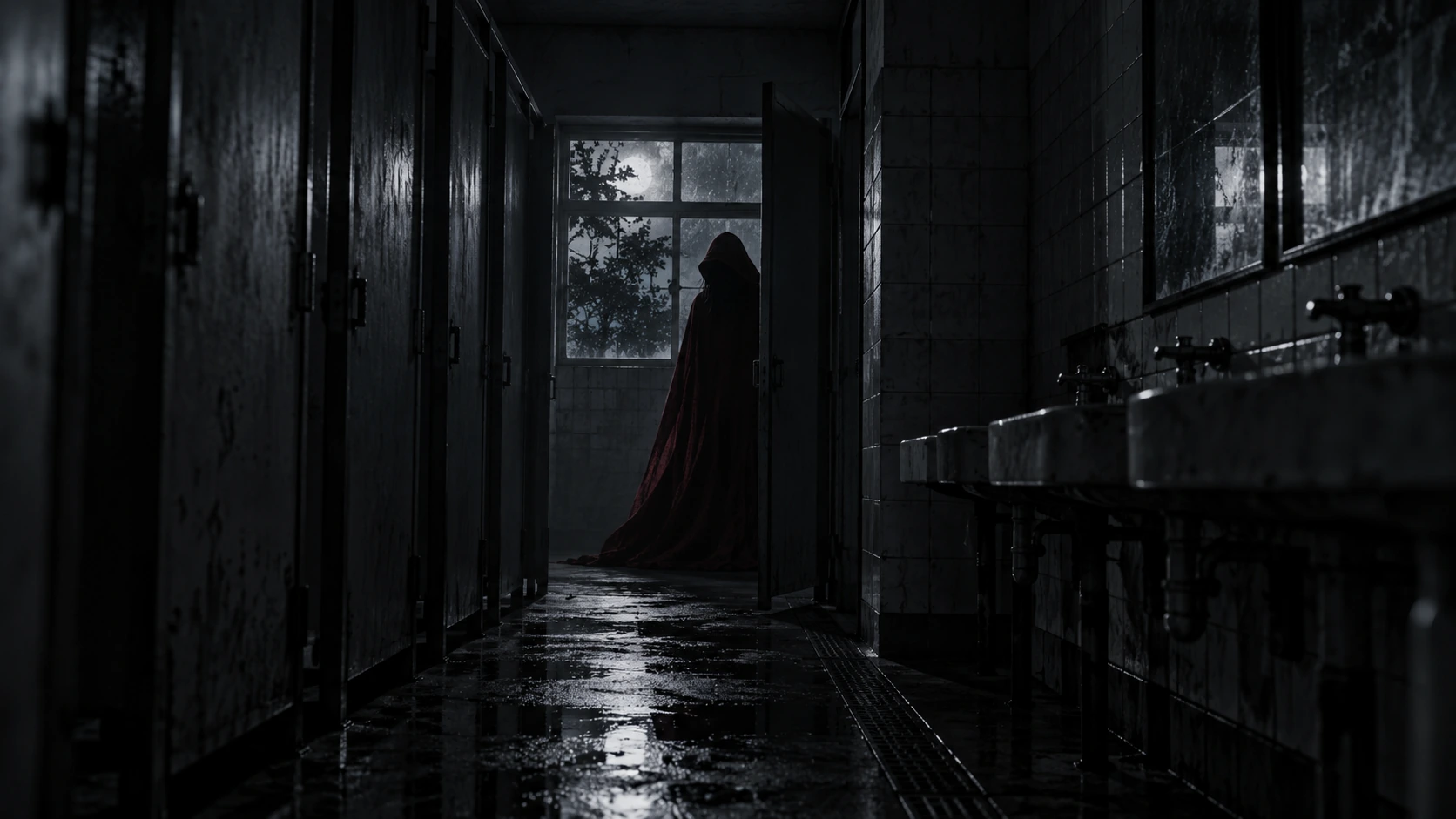
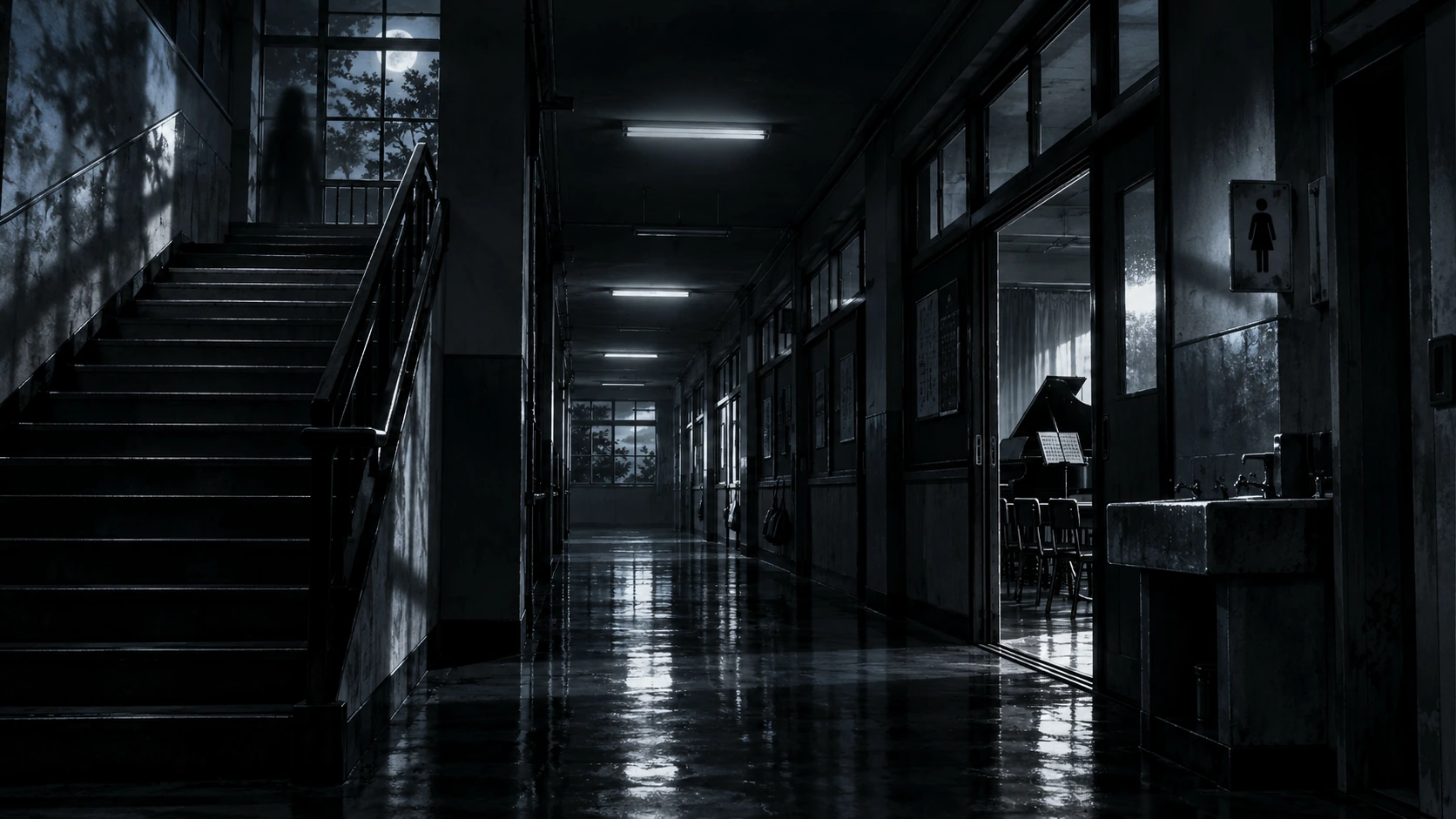
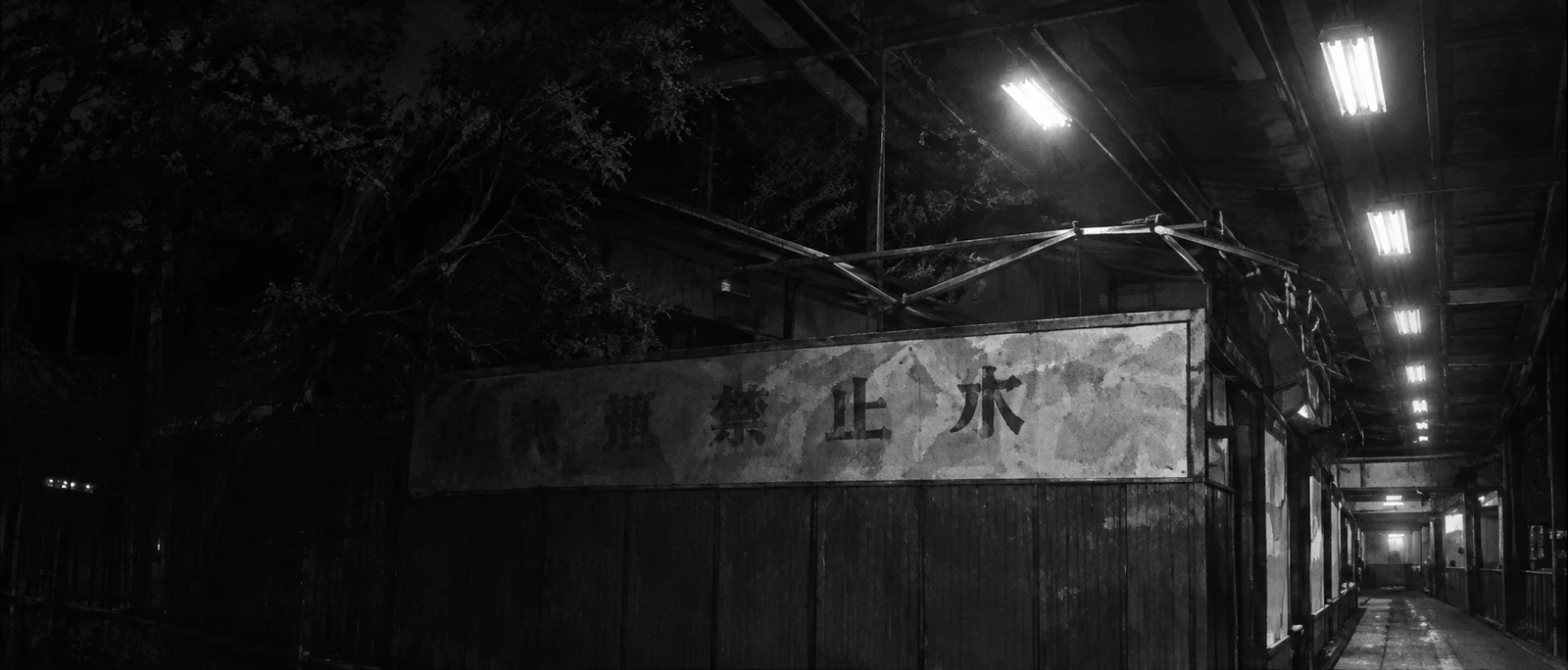
An empty school after dark. A shopping mall with all the lights on but no shoppers. An underground passage that seems to lead nowhere.
There is no monster in sight. Nobody is chasing you. Still, you find yourself slowing down before the next corner, listening for something you cannot identify.
Some of the most distinctive recent horror games have turned that sensation into an entire experience.
In POOLS, players wander through interconnected indoor swimming facilities without conventional enemies. The Exit 8 makes a familiar Japanese underground corridor feel increasingly suspicious. Anemoiapolis: Chapter 1 transforms vacant, everyday architecture into an uncanny landscape.
These games suggest that horror need not begin with something frightening appearing on screen. Sometimes it begins when we are no longer sure we understand the place we are standing in.
POOLS: A game that deliberately leaves the monster out

Released on April 26, 2024, by Finnish studio Tensori, POOLS is an exploration game set among vast, interconnected swimming facilities.
Imagine pale tiled pillars, waterlogged stairways, blue-green pools and corridors disappearing beyond the edge of the light. The buildings look as though they were made for people, but swimmers, lifeguards and visitors are nowhere to be found.
There is little traditional story, no conversations, and no background music. Most of the experience consists of walking, looking and listening. Even the usual game interface is absent.
Most importantly, the developers have deliberately avoided enemies that chase the player or leap at the screen.
In a June 2024 Steam discussion, someone asked Tensori to add monsters. The developer declined, explaining that remaining monster-free was fundamental to the game’s identity and that the team wanted to concentrate on atmosphere.
Read Tensori’s explanation · Official game website
This is more than a decision about the budget for creature animation. It changes what players pay attention to.
When an enemy appears, fear gains a recognizable object. You can start learning its behavior, identifying escape routes and looking for ways to survive. When there is no enemy, none of those strategies quite apply.
The next room might be harmless. The strange architecture might continue forever. Perhaps nothing will happen at all.
The game offers no simple way to settle those questions. Without a monster to focus on, the environment becomes the central source of uncertainty.
Why a footstep can matter more than a soundtrack
Sound is one of the most important elements of POOLS.
A step through shallow water has a different character from a step on a hard floor. Large rooms echo differently from narrow passages. Surfaces and the shape of each room change what you hear.
Conventional horror music frequently gives audiences a cue: a threat is approaching, or this is the moment to be afraid.
POOLS withholds many of those signals.
If you hear an unfamiliar noise, you may not know whether it comes from your movement, the water or the architecture. Because the surroundings are otherwise quiet, the smallest sound can begin to feel meaningful.
The paradox is that removing the warning signs also removes some of the evidence that nothing dangerous is happening.
And this helps explain why the same environment can seem both peaceful and disturbing. Its softly illuminated water looks beautiful. Its emptiness can feel soothing. But you may still hesitate before stepping into another corridor.
The Exit 8 makes you doubt your own memory

The Exit 8 builds tension using a different mechanism: it asks players to decide whether an everyday place has changed.
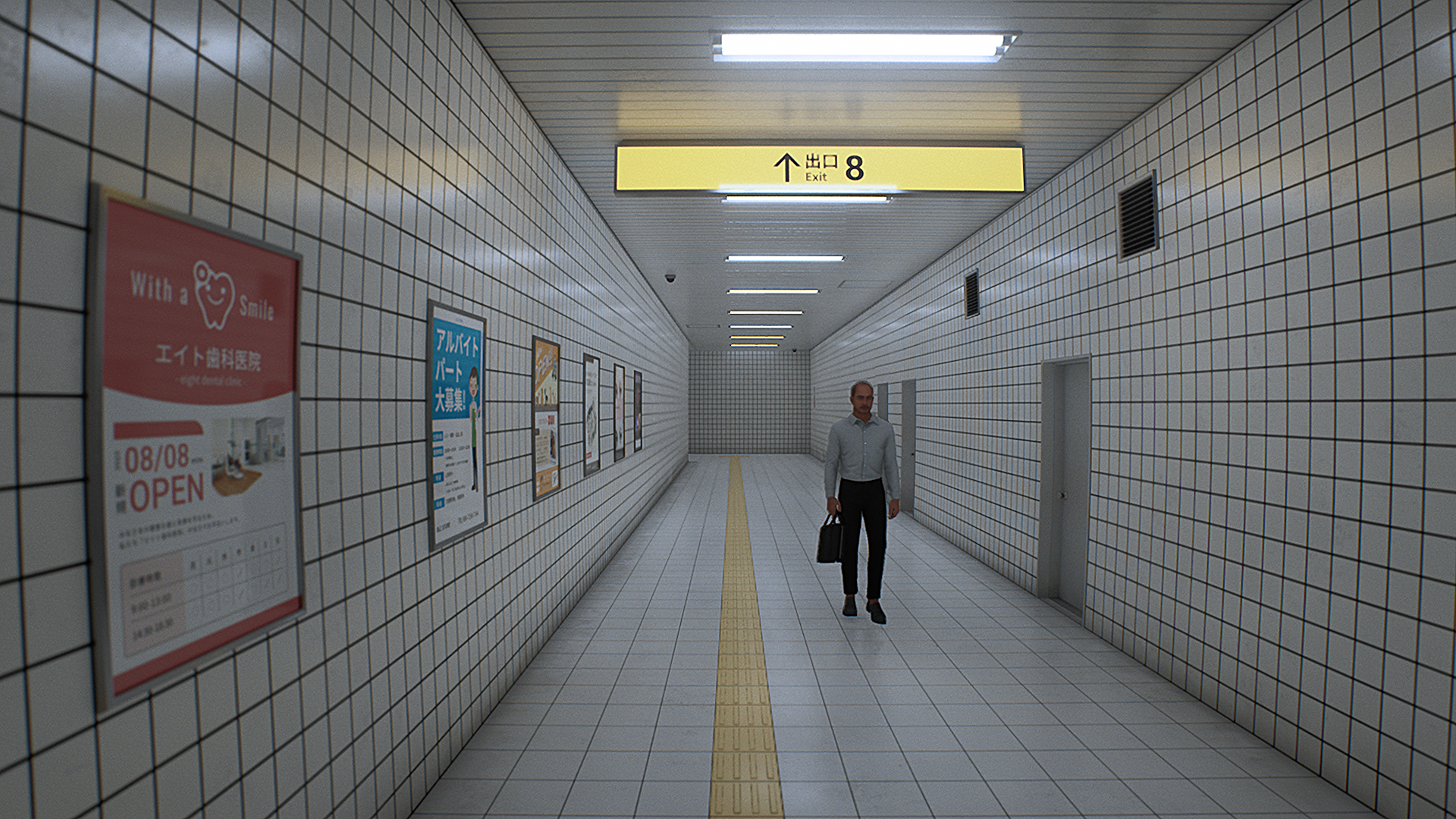
The game, developed by KOTAKE CREATE and released in November 2023, is set in an ordinary-looking Japanese underground passage. Its tiled walls, advertisements, yellow tactile paving and overhead signs are familiar details of everyday urban life.
There is one crucial rule: if you notice an anomaly, turn around; if everything appears normal, proceed. A wrong decision sends you back.
Soon, the player begins examining things that most pedestrians would scarcely notice.
Was that advertisement always there? Did the overhead sign look like that before? Is there something wrong with the person approaching from the opposite direction?
The game makes ordinary objects feel suspicious by insisting that you compare each scene with the one you remember.
Its design received the Breakthrough Award at the Japan Game Awards 2024, whose official commentary highlighted how countless ordinary features of the passage become objects of scrutiny.
Official game information · Japan Game Awards 2024
To be clear, The Exit 8 does include overt anomalies and startling scenes. It is not a game where nothing ever happens.
But much of its tension begins earlier, with an uncomfortable thought: What if something has changed and I have failed to notice it?
It turns the player’s own attention and memory into part of the horror.
What is a liminal space, anyway?
The word liminal refers to a threshold or transitional state. In architecture, corridors, stairwells, waiting rooms and passages are obvious examples of spaces people move through on the way to somewhere else.
Internet culture has broadened the idea.
An empty school hallway, a deserted indoor pool or a brightly illuminated but vacant shopping center may all be called liminal spaces when they produce a dreamlike sense of familiarity combined with something difficult to explain.
The key is not simply that nobody is there.
An unoccupied mountain trail at midnight may be perfectly ordinary. A public swimming facility with its lights on and its equipment working—but not a single person anywhere—can feel different.
We tend to understand places together with the activities that belong in them.
Schools have students and teachers. Stations have passengers. Swimming pools have swimmers.
When the architecture remains but the expected activity disappears, a question arises: Why is this place empty?
Cultural critic Mark Fisher explored a related idea in The Weird and the Eerie (2016): the unsettling effect of something being absent where we expected it, or present where it should not be.
This is a way to interpret aesthetic experiences, not an experiment proving why every player fears an empty pool. Yet it helps explain why the absent visitors in POOLS can feel almost like characters in their own right.
The psychology of an uncertain threat
Psychology offers another way to think about these experiences.
In a 2013 review published in Nature Reviews Neuroscience, Dan Grupe and Jack Nitschke examined the relationship between anxiety and uncertainty about possible future threats.
Their central concern was not videogames. They discussed how uncertainty about whether or when something harmful might happen can shape attention, anticipation and behavior.
That distinction matters. We should not claim that a specific scientific study has proved why POOLS is frightening.
But the research offers a useful framework for comparing games.
In POOLS, the player may not know whether a threat exists at all. In The Exit 8, players are concerned that they may have missed evidence of an anomaly.
Both are forms of uncertainty, but they pull attention in different directions.
One makes you question the safety of a space. The other makes you question the reliability of your observations.
Why repeating corridors undermine our sense of place
Many liminal-space games feature seemingly endless sequences of similar rooms.
When an environment lacks distinctive landmarks, it becomes difficult to tell whether you have entered a new location or returned to somewhere you have already been.
POOLS lets players wander through architecture that gradually changes in unexpected ways. The Exit 8 makes close comparison between repeated corridors its core gameplay mechanic.
The act of controlling the character is important too.
In a film, we watch someone else choose whether to enter the dark hallway. In a game, we make the choice ourselves.
Each turn into an unfamiliar space is a decision we must own. A failure of direction or perception can feel more personal because it comes from our own actions.
Anemoiapolis and the haunted ordinary

Andrew Quist’s Anemoiapolis: Chapter 1, released in 2023, explores a similar aesthetic through architecture reminiscent of American malls and public buildings.
Its corridors and indoor spaces are often bright and familiar, yet their layout and emptiness feel wrong.
On the developer’s official itch.io page, Quist describes an attempt to recreate the feeling of being in an empty mall or a school at night.
Unlike POOLS, however, Anemoiapolis includes puzzles, mazes and more overt danger. Treating all three games as identical examples of completely monster-free design would miss the point.
What connects them is their ability to make normal-looking buildings stop feeling normal.
A corridor should lead to a destination. A public space should serve a recognizable purpose. When those expectations fail, architecture becomes a source of mystery.
The Backrooms: How one strange room became an internet world
A major cultural influence on this aesthetic is The Backrooms.
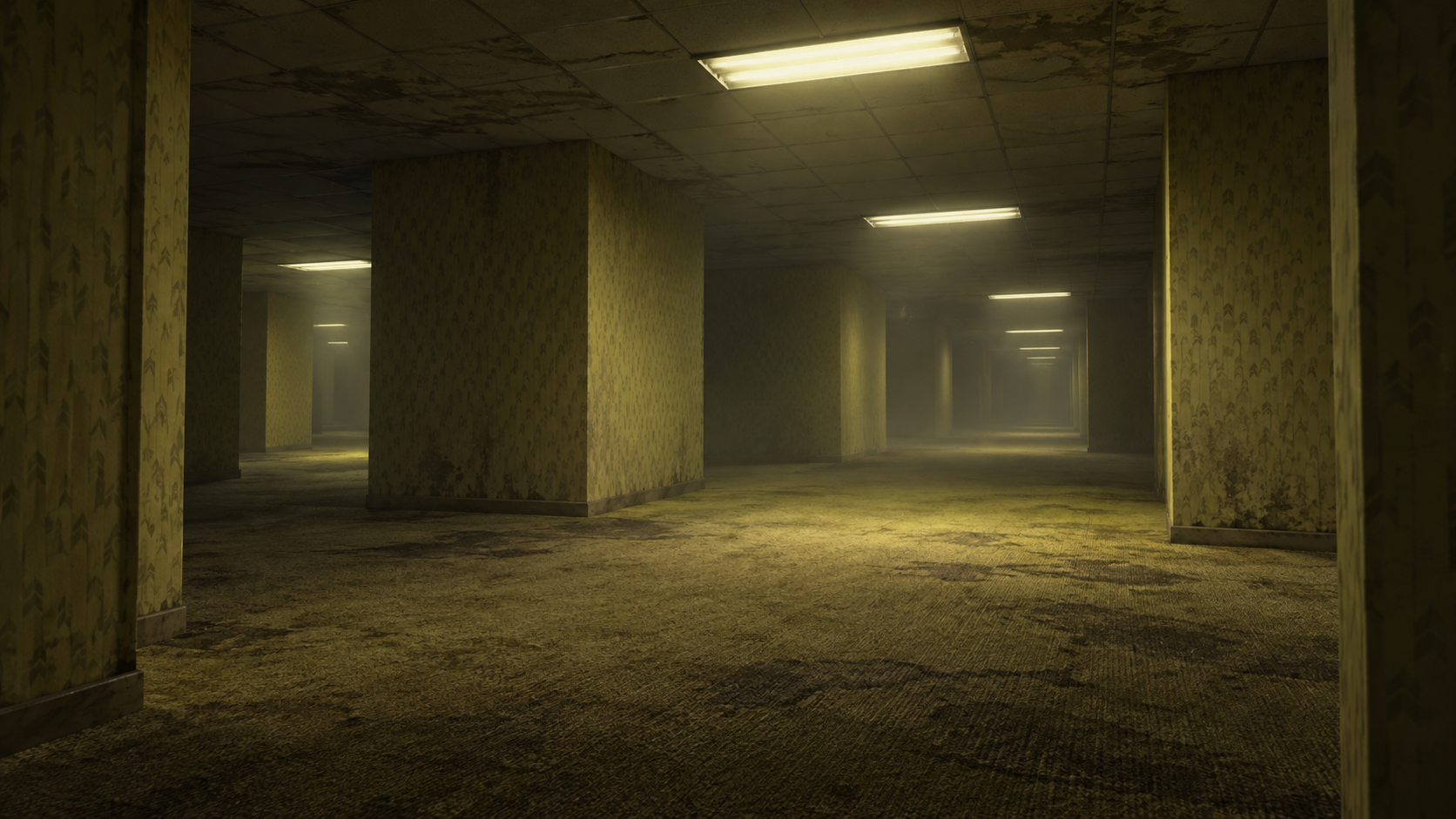
Around 2019, a photograph of apparently endless yellowish rooms under fluorescent lighting became linked to an internet horror story about slipping out of reality and becoming trapped in an impossible environment.
The idea expanded through discussion boards, images, short fiction, videos and games. Many creators added their own locations, rules and monsters.
Researchers Day Cho and Natalie Underberg-Goode examined this development in a 2025 article in Contemporary Legend, tracing how the Backrooms phenomenon moved across online communities and interactive media.
Although many later Backrooms stories include creatures, its enduring power comes partly from that simple visual premise: an ordinary room that feels detached from ordinary life.
The audience supplies the questions.
Where is this? Why is there nobody here? How would you get out?
POOLS adapts that mood into aquatic architecture. The Exit 8 makes a familiar passageway into a repeated test of observation.
Not everybody finds the emptiness frightening
Liminal environments can also be comforting.
The official description of POOLS combines terms associated with relaxation and unease. Some viewers may find the quiet water and unoccupied rooms peaceful, while others may be disturbed by the lack of an exit or other people.
A deserted school might recall a happy childhood memory. An old shopping mall might feel nostalgic rather than threatening.
There is no reason to assume every viewer reacts identically.
What makes the aesthetic so compelling is its ability to hold apparently opposite sensations together: familiar yet unknown, beautiful yet uncomfortable, brightly illuminated yet strangely abandoned.
The fear is often subtle enough that viewers can choose to explore it rather than flee from it.
The real horror is losing faith in an ordinary world
POOLS uses architecture and sound to create uncertainty without a conventional enemy.
The Exit 8 turns an ordinary corridor into a test of observation, inviting players to distrust details they would normally ignore.
Anemoiapolis builds mystery from everyday buildings whose normal purpose seems to have disappeared.
What these experiences share is not a particular monster, but a disruption of our expectations about the world.
Corridors lead somewhere. Signs remain where they were. Pools have visitors. Familiar places behave in familiar ways.
Change just a little of that—and even a perfectly ordinary hallway can make us stop in our tracks.
Perhaps the most frightening discovery is not that something terrible is hiding inside a building. It is that we can no longer trust the building, or our own understanding of it, to make sense.
Next time you find yourself alone in an underground passage, you might look at the posters for a moment longer than you used to.
Games and sources
- POOLS — Tensori official website
- POOLS — developer discussion about excluding monsters
- The Exit 8 — PLAYISM
- Japan Game Awards 2024
- Anemoiapolis: Chapter 1 — official developer page
- Grupe & Nitschke (2013) — Uncertainty and anticipation in anxiety
- Cho & Underberg-Goode (2025) — Lost in Liminal Space
- Mark Fisher (2016), The Weird and the Eerie
Editor’s note: This feature is based on official game material, developer statements, psychological research and cultural analysis. It is not an independently verified full playthrough of every game discussed. The psychological explanations are interpretations informed by broader research, not experiments directly proving these games’ effects on players.