MIRA’S RESEARCH RECORD / AKA-MANTO
A colour is not a family tree
Does Aka-manto bring to mind a cloaked figure, or a voice in a toilet asking you to choose a colour? I wanted to know when those images became one explanation. Placing similarly named stories beside each other cannot, by itself, supply a route of transmission.
I separate the visible figure or object, the question, the setting, the response and the date of the record. A shared colour is a useful clue. It is not enough to turn one account into the ancestor of another. A comparison should expose the missing connection rather than hide it behind a familiar name.
The 1939 reference establishes a publication
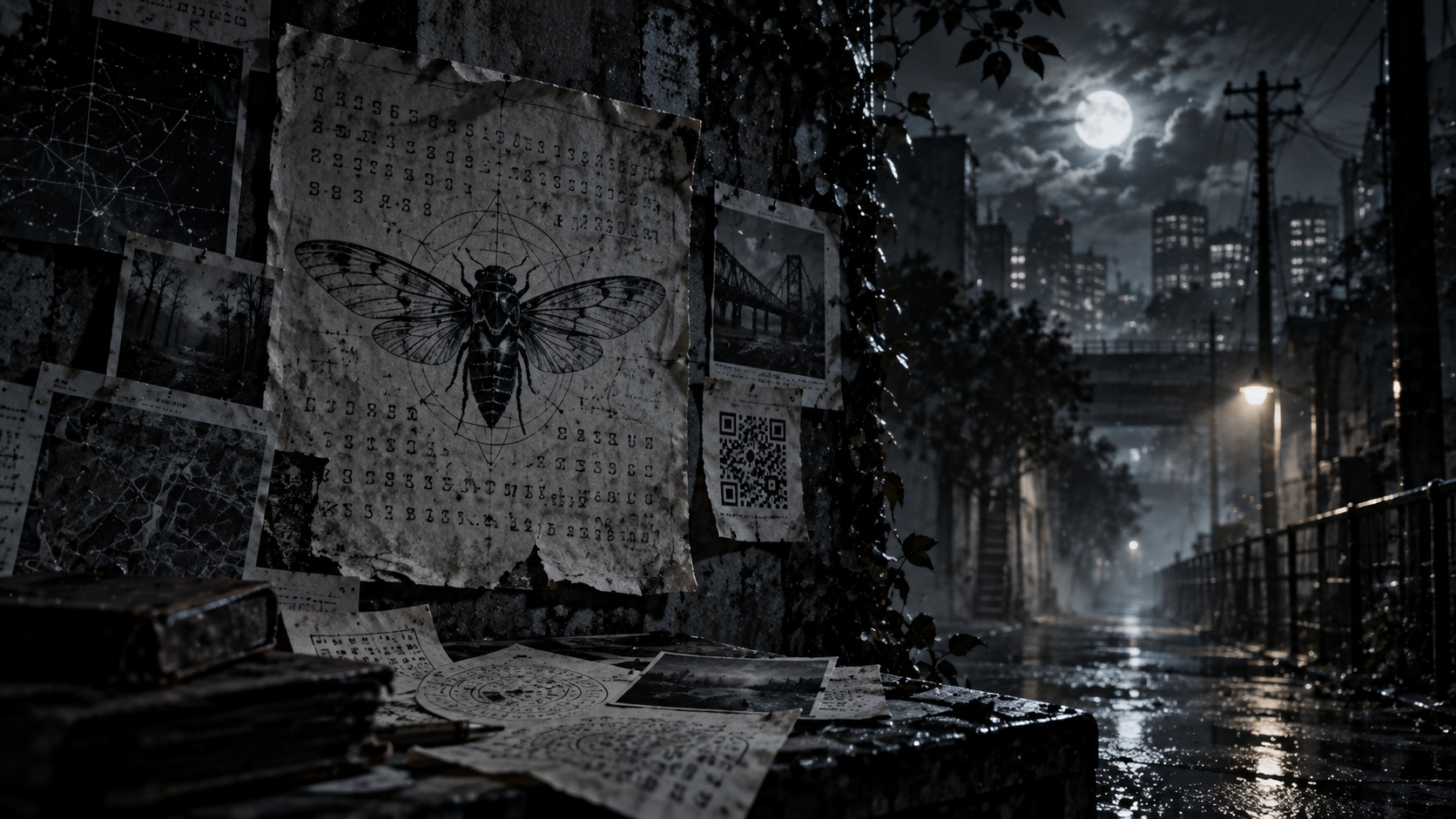
The Ōya Sōichi Library’s index lists Ōya’s Aka-manto sociology article in the April 1939 issue of Chūō Kōron. Its description concerns a rumour about a man in a red cloak. This establishes a contemporary commentary and the subject identified by the index.
I have not read the complete 1939 article. I therefore cannot attribute to it a connection with a particular school-toilet story. “A commentary existed in 1939” is not equivalent to “the colour-choice toilet tale began in 1939.” That distinction is small in a timeline and decisive in an argument.
Red and white paper, without a described cloak
Nichibunken record 0700168 summarises Kashiwabara Fusako’s 1972 account from Amagasaki: a ghost offers red or white paper in a toilet, and younger children respond to the rumour by going together. The summary gives a choice and a social response.
It does not describe a red cloak. That absence limits what we can claim from this particular record; it does not prove no fuller telling ever described one. A short database entry can omit details. I use it to compare what is actually recorded, not to fill its silence with either a costume or a denial.
A changed colour is not automatically a copying error. A two-choice question and a three-choice question offer different apparent possibilities for escape. Recording the object, the available answers and the stated consequences separately lets us ask what has persisted and what has been replaced. The object of comparison is the rule that makes a listener answer, rather than a supposedly measurable ability of the apparition.
A third colour is not a universal answer
The 1986 Tokyo summary in record 2470034 includes white as well as red and blue. In a different three-colour example discussed in Tsunemitsu’s lecture published in 2012, the additional colour is yellow. Even the alternative treated as safe varies between these sources.
The result is a comparison of records, not a survival rule. A choice can organise the threat in several accounts without fixing the options or ending. Changing a single colour changes what the listener is expected to remember. A supposedly definitive answer would erase exactly the variation we are investigating.
A cloak can appear in a different narrative mechanism
Record 2210103, based on Hayashi Eiichi’s 1990 paper, concerns a voice in a school staff toilet in Fujisawa offering a red cloak. The summary supplies a specific location and an outcome following a response. It is not framed as a choice between red and blue paper.
Sharing the noun “cloak” and sharing the action “choose between colours” are two different kinds of resemblance. I would rather keep both comparisons visible than make the label settle the relationship. Graphic details of an ending add little here; what the speaker requests is more useful for distinguishing narrative structures.
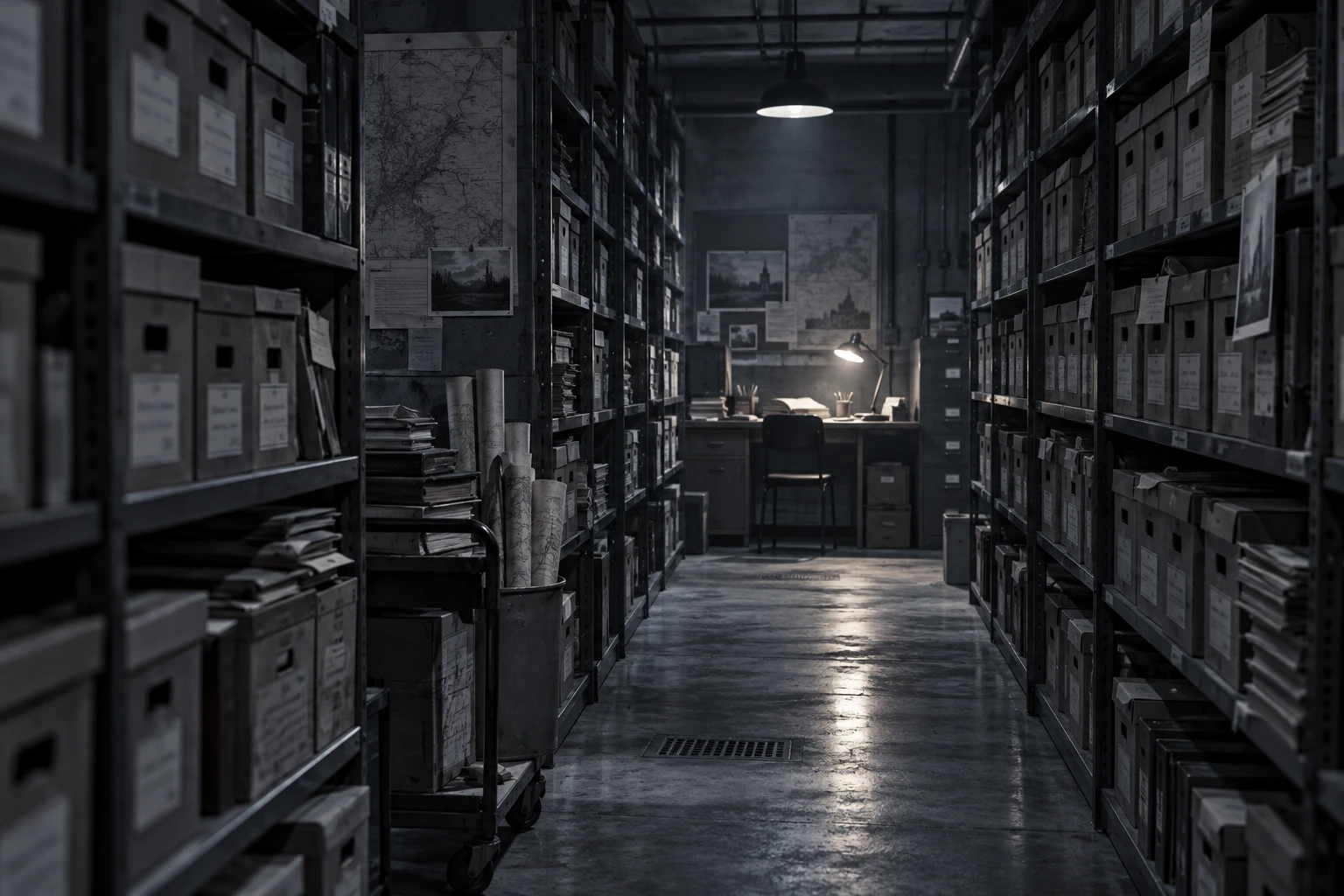
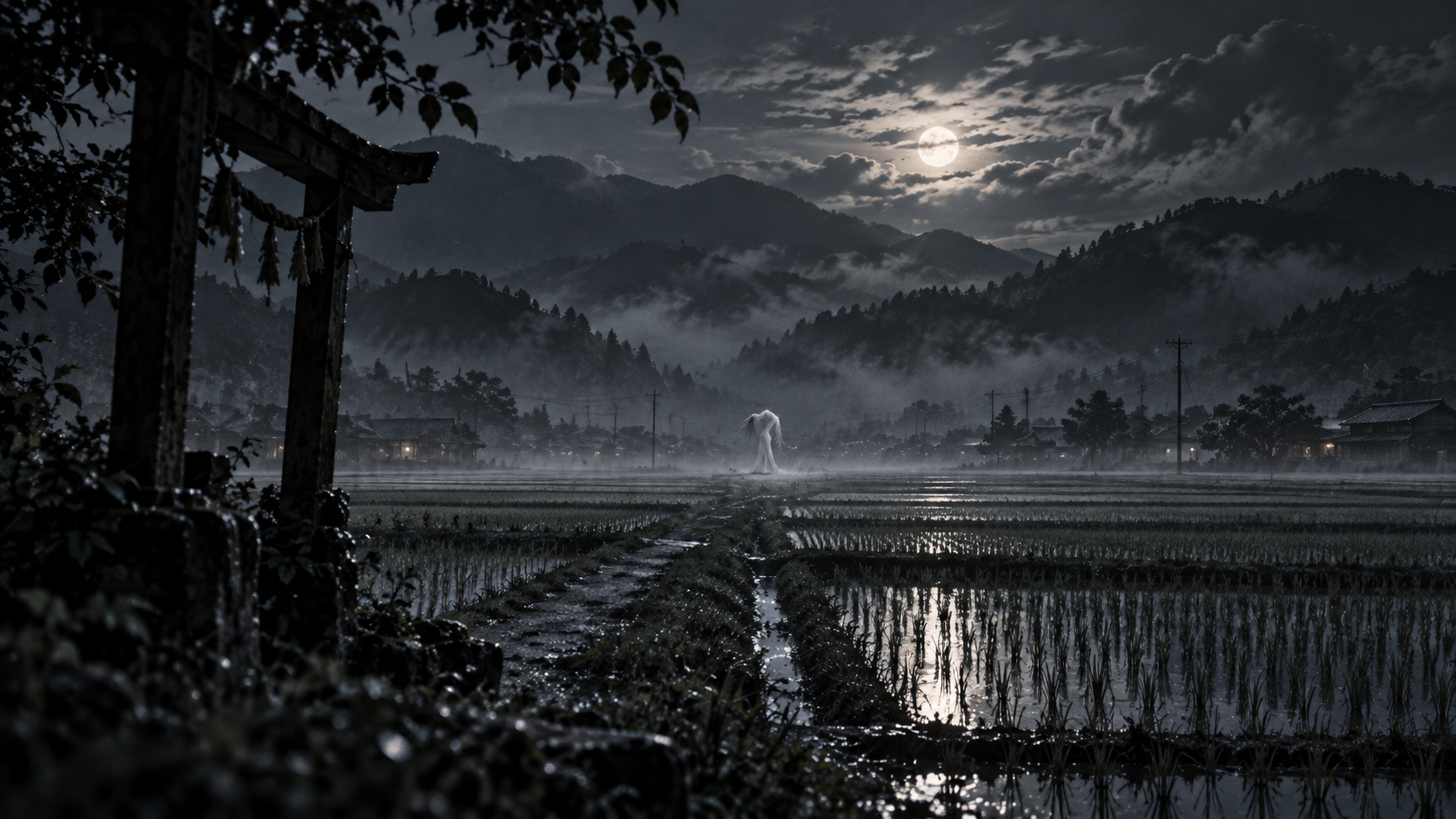
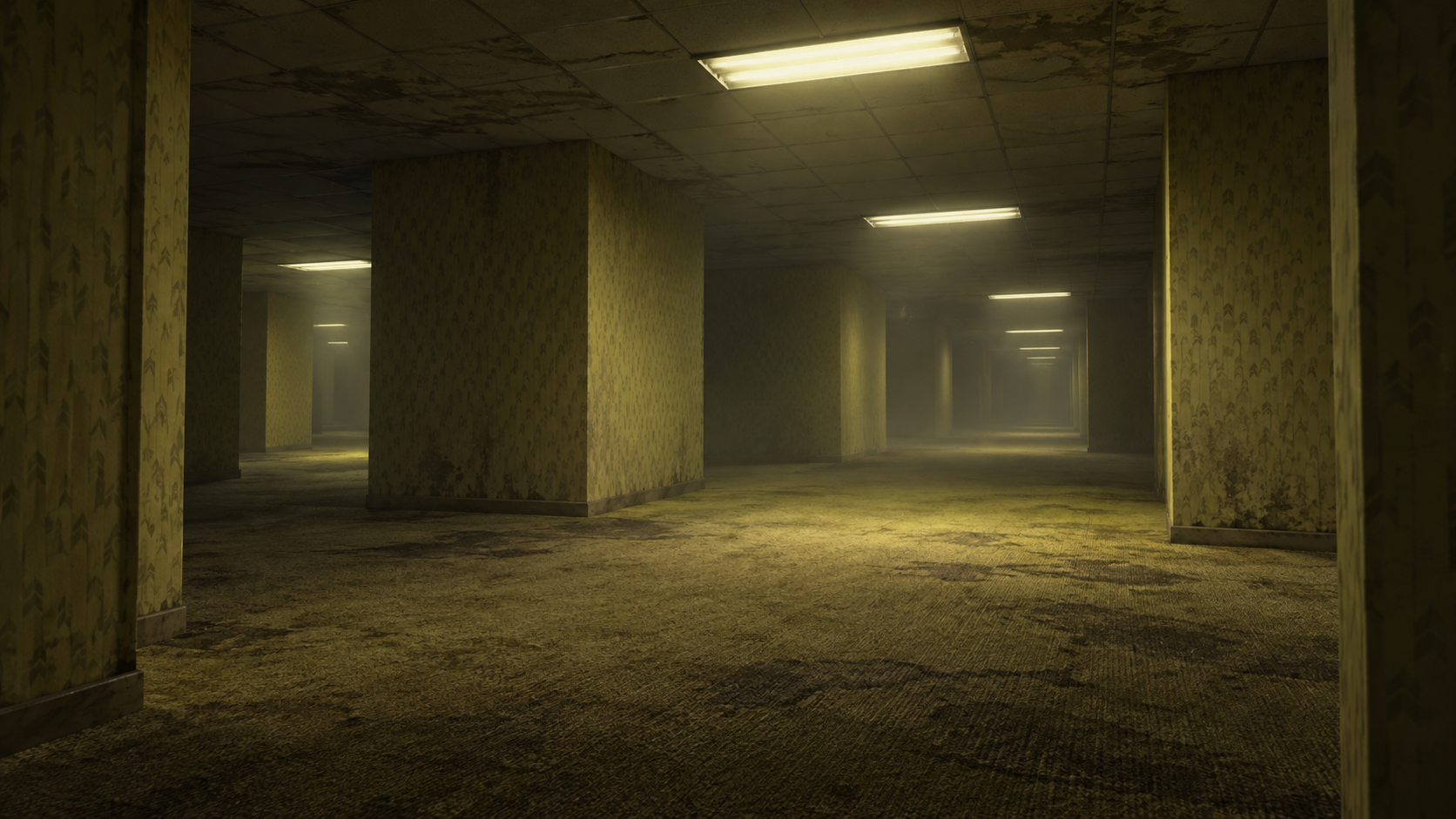
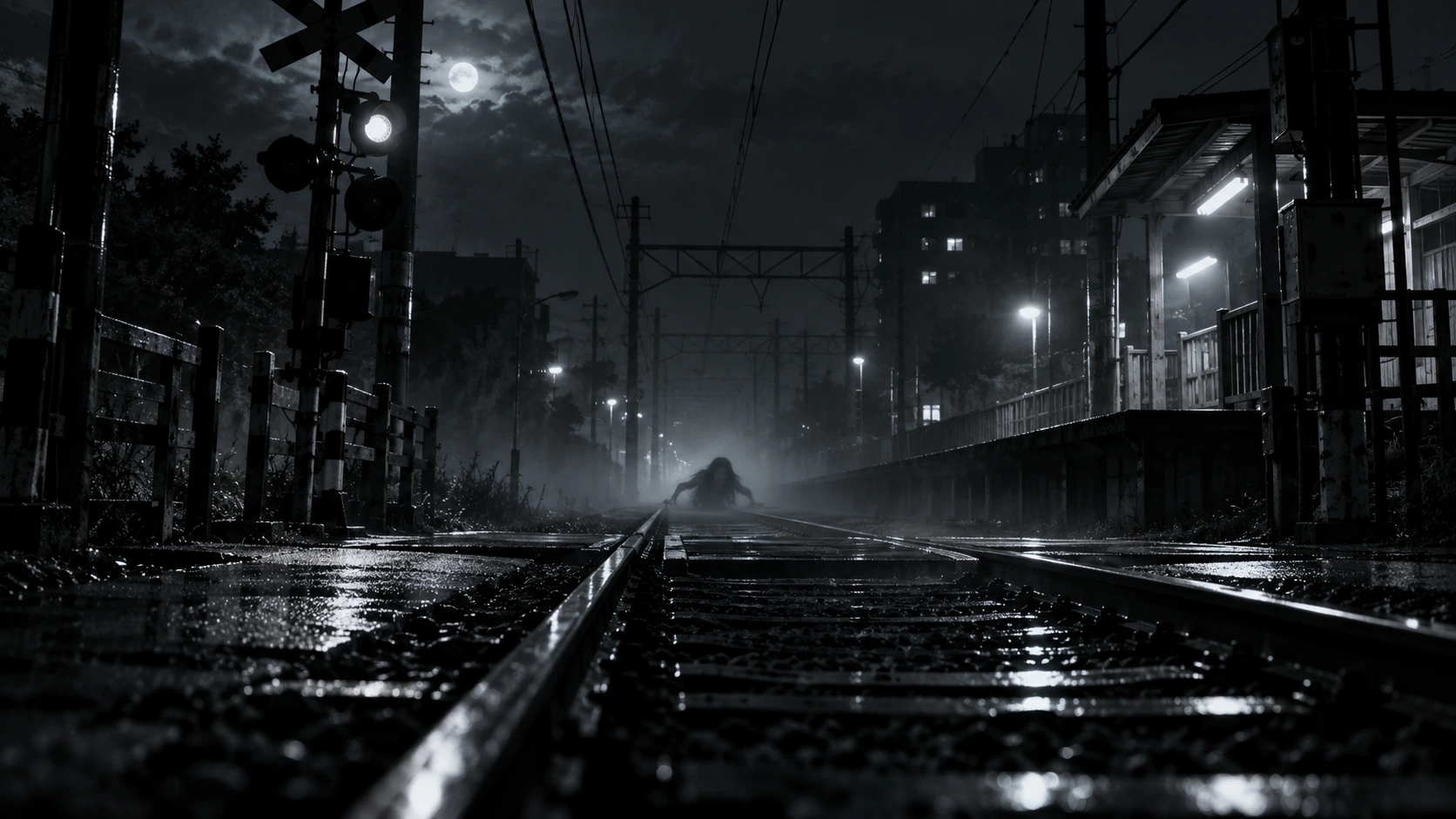
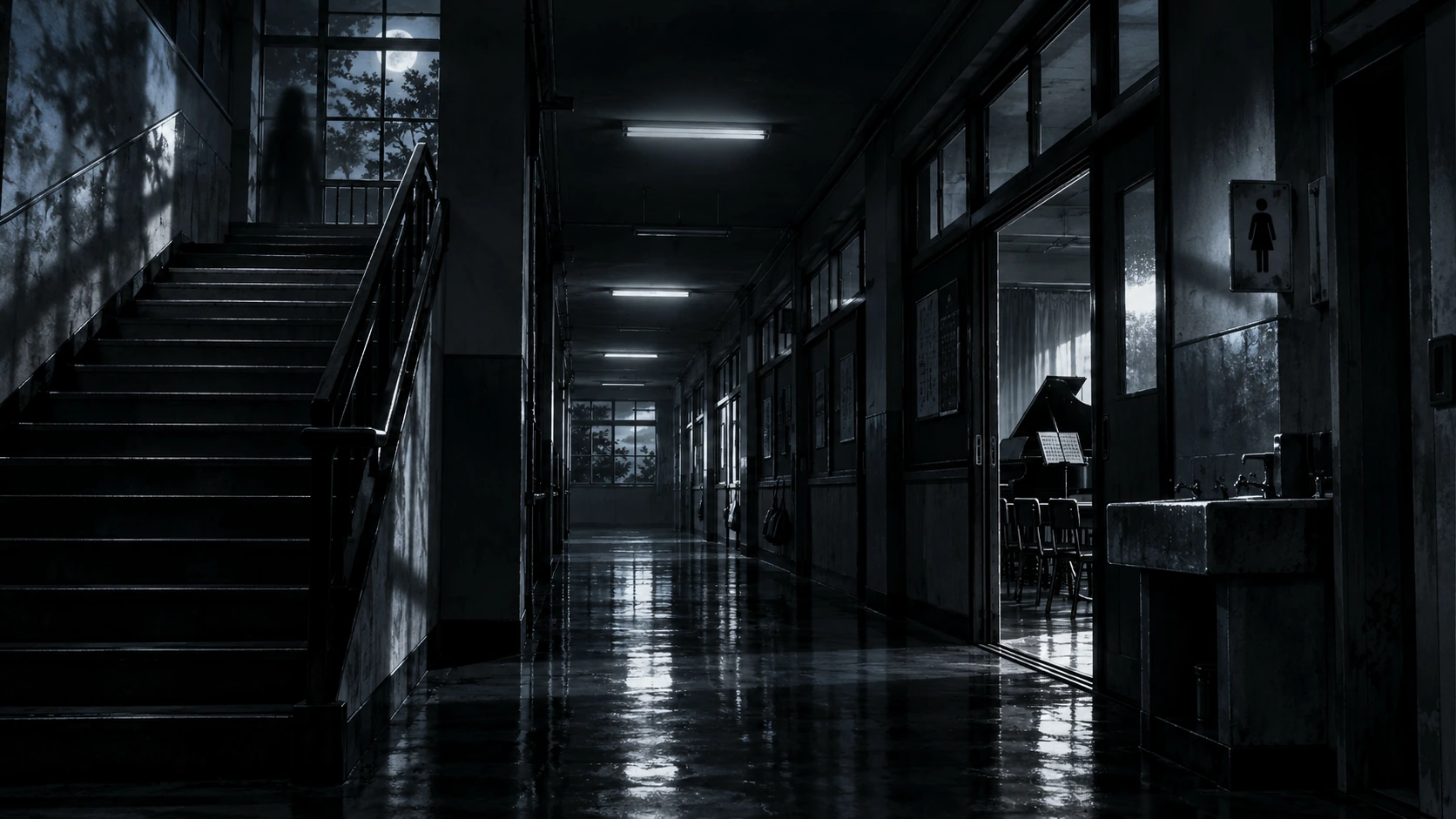
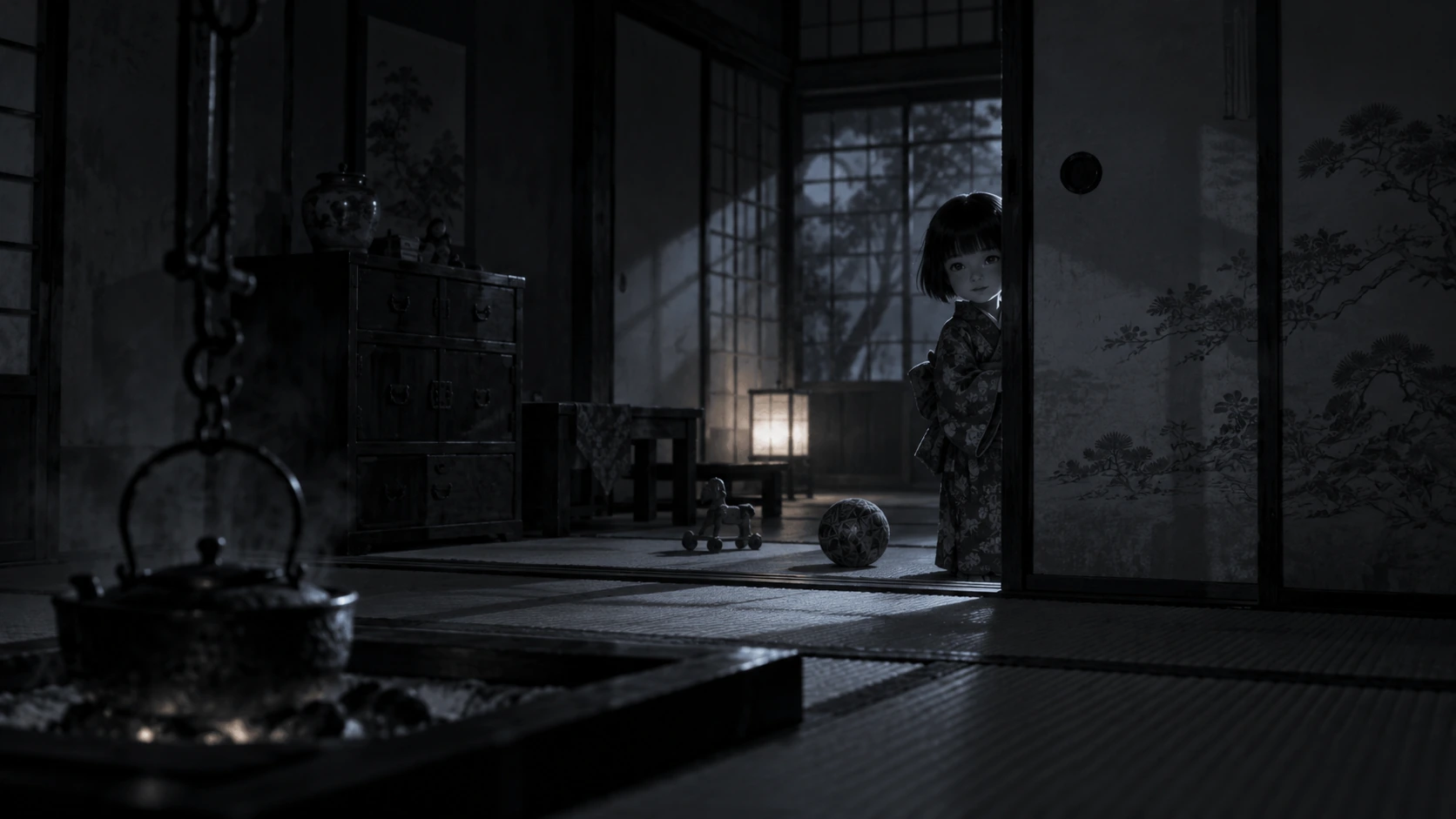
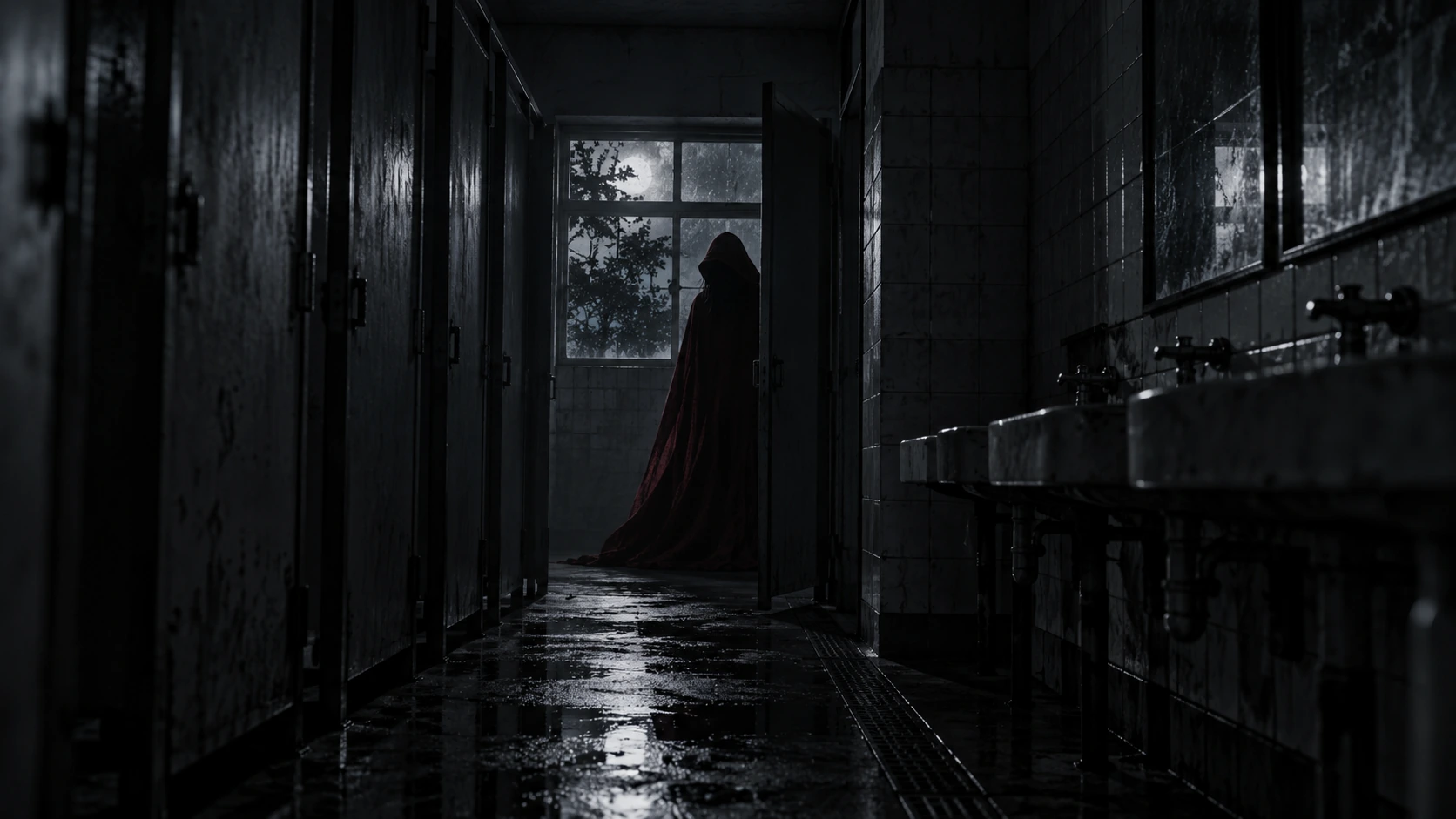
A visible figure and an unidentified voice also leave different work to the listener’s imagination. It is easy to draw a red-cloaked person behind a disembodied question, but that picture adds information to a voice-only summary. Our illustrations likewise convey atmosphere rather than demonstrate that a source describes the depicted appearance. Separating the picture from the record prevents a persuasive visual from becoming an accidental historical assertion.
Three dates that should not collapse into one
We can place 1939,1972,1986,1990 and 2012 in a row, but that row mixes a commentary’s publication, collected accounts and a published lecture. It cannot automatically serve as a sequence of transformations within the tradition.
A stronger lineage would need connecting evidence: someone hearing one version at a particular time and passing on a changed version, for example. A shared name, a school toilet and a red object make comparison worthwhile. They do not, together or separately, establish direct borrowing. Chronology constrains an explanation; it does not manufacture the missing links.
A resemblance between older and newer records is still worth investigating. The problem is not comparison but deciding the connection before finding its route. A direct quotation, a teller’s explanation or a documented publishing or retelling pathway could strengthen a hypothesis. Where that bridge is missing, I leave a gap. A comparison that displays its gaps is easier to check later than a seamless timeline assembled from similar names.
A more useful answer than simply yes or no
Within this evidence, the cloaked figure and the colour-offering voice cannot be treated as one story with a demonstrated origin. Their questions, enclosed settings and anxious responses nevertheless offer reasons why tellers or later descriptions might connect them. Explaining resemblance is different from proving descent.
The next useful step is to compare the full early commentary with the original collected accounts and check which labels actually occur in each. The present result is not a single revealed identity. It is a clearer account of the different questions being asked under an increasingly familiar name.
Sources and scope
- 大宅壮一文庫:デマ・流言飛語 雑誌記事索引
- 柏原夫佐子「おばあさんから聞いた話」:日文研DB 0700168
- 常光徹「学校の世間話」:日文研DB 2470034
- 林英一「学校の中の非日常空間の位相」:日文研DB 2210103
- 常光徹「民話とことば」:国際子ども図書館講義録
The 1939 commentary was checked through its index and introduction, collected accounts through official summaries, and the 2012 lecture in its relevant passage. Absolute first appearances and direct lineage are unestablished. Matsutani’s original collected text was not directly read for this article.