IN 3 LINES
- Hillthorn launched November 10, turning a disappearance in a mountain community into a card-based investigation.
- Its official design combines time spent on actions with progression through knowledge and multiple endings.
- Removing dialogue can deepen interpretation while creating new communication problems; this is source-based analysis, not a play review.
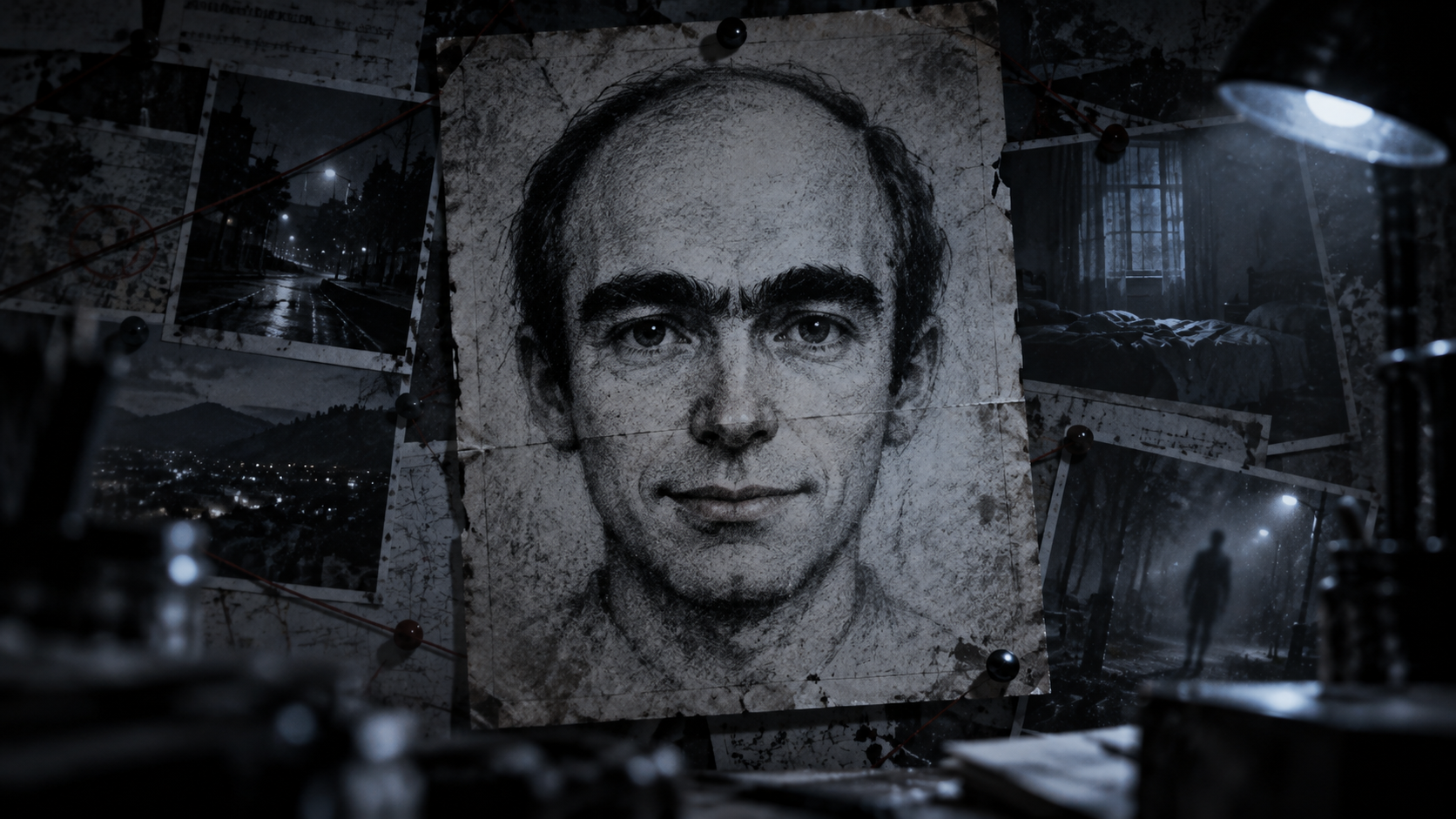
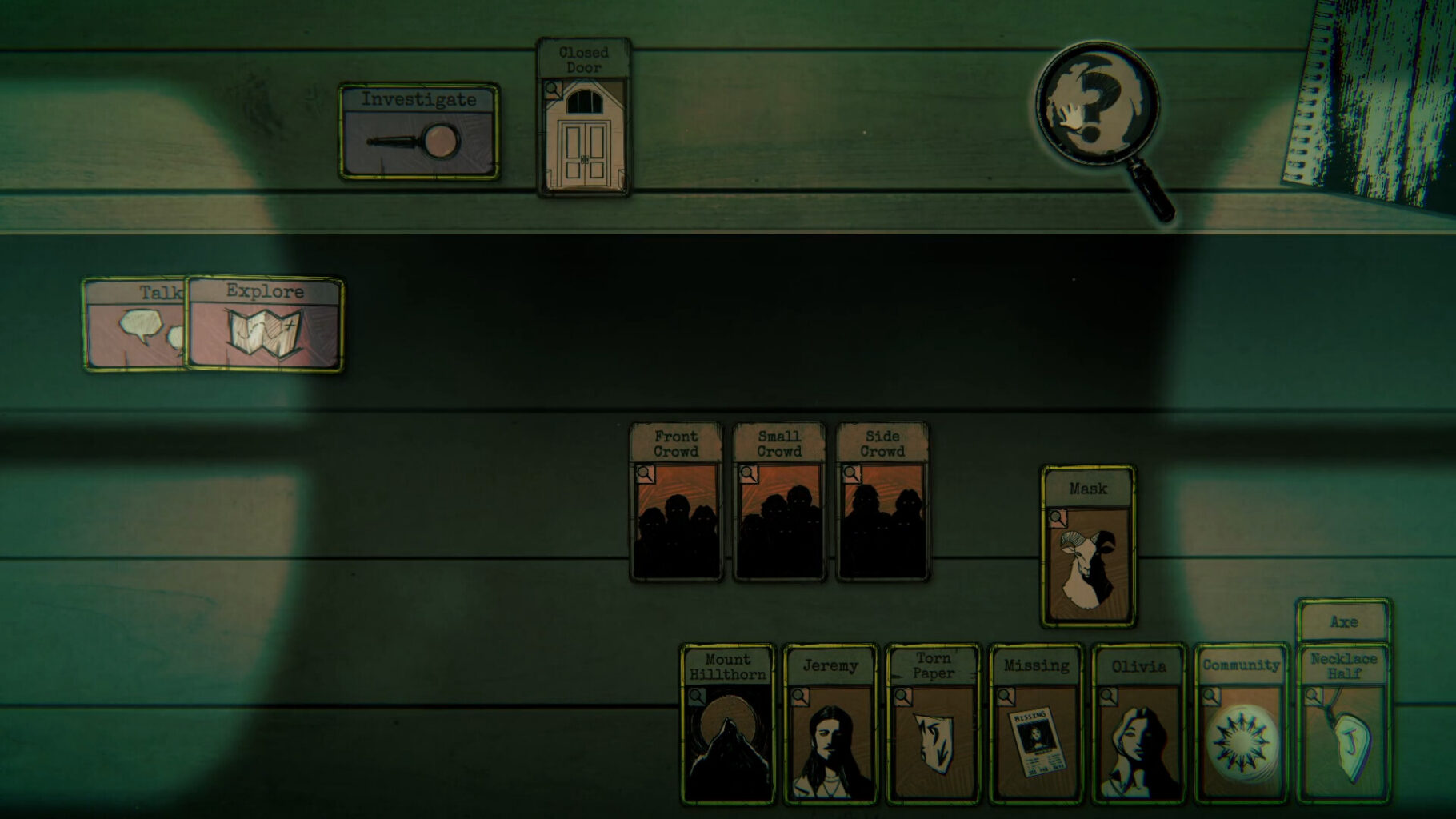
Instead of reading a lengthy witness statement, imagine choosing which action to apply to a card representing a person or a clue. Hillthorn uses that structure to investigate a disappearance in a remote mountain community. Raw Fury announced its release for Steam, iOS, Android and Nintendo Switch on November 10, 2026. On November 11, the Steam product page also lists the full game as released. The news is therefore a launch, rather than another announcement of a future release window. Launch announcement
The more interesting question lies beneath the cards: who must decide what a piece of information means? Official materials describe an investigation without dialogue, a clock advanced by actions, and knowledge as progression. Together, those features suggest a game concerned with the limits of a detective’s understanding. This article examines that proposition using product information and development records. We have not played the game, and are not offering a verdict on its controls, puzzle fairness, atmosphere in practice or ending quality.
Cards as ways of acting on a world
Steam credits Fool Moon and Finnegan Motors as developers, with Raw Fury publishing. The protagonist investigates a missing person as an outsider in a secluded community. According to the official setup, local people are reluctant to share information with someone beyond their circle. The story is presented as a fictional mystery, not as the reconstruction of a documented real disappearance. That distinction matters when discussing the investigation: its uncertainty is part of an authored dramatic situation. Full game on Steam
Clue cards can be investigated, explored, or, in some circumstances, used to communicate. The advertised emphasis is consequently different from the contest of attack values that the phrase “card game” might suggest. Possessing a clue is only part of the task; choosing what to do with it supplies another part. This does not mean every possible combination produces a useful response. It describes the basic relationship between information and action, rather than a promise of unrestricted interaction or an account of particular solutions.
For example, a piece of information could have a different investigative purpose when used to explore a location than when used to question a person. That is a hypothetical explanation of the structure, not a spoiler or a claim that a specific puzzle works in precisely that way. Separating collection from interpretation helps explain the appeal. A growing pile of cards need not amount to a better understanding of the case. The player must still decide which relationships are significant and which assumptions deserve another test.
A development record about the map in your head
The creator’s earlier itch.io prototype described combining actions with clues, arranging thoughts on a board, and managing time. In a reply to a player, the creator also expressed a preference for keeping a map in the player’s head rather than representing it directly. These are records of prototype intentions. They do not establish whether the released game contains a map, what its notebook features are, or whether every proposed interface change was eventually implemented. Treating comments as a final specification would obscure their actual value. Prototype and creator replies
Their value is to reveal an interest in making organization part of investigation. If players must remember relationships among people, places and cards, arranging information becomes an act of reasoning. The same approach could also create a burden when someone needs to reconstruct what they already knew. That tension is worth testing in the finished product. It is more useful than turning an old design preference into a claim that the current interface certainly succeeds, or that one way of taking notes will suit every player.
The creator acknowledged inspiration from Weather Factory’s games. A relevant comparison is Cultist Simulator, released in 2018: its official description presents card combinations and choices as ways to shape a story. Hillthorn should therefore not be credited with inventing narrative through cards. The productive comparison concerns how a shared expressive device is directed toward a different task: investigating a mountain disappearance while withholding spoken dialogue. It does not establish equal difficulty, shared rules or superior storytelling, none of which follows from the resemblance alone. Cultist Simulator’s official description
Analysis: fewer words transfer more interpretive responsibility
Our first argument joins two documented observations: the investigation avoids dialogue, and its detective is an outsider facing a guarded community. In combination, silence could do more than create mood. It could make the player responsible for constructing a provisional explanation instead of receiving one ready-made from a witness. A visual response can suggest a relationship without explaining its cause. That space between observation and explanation is potentially a useful place for detective play to happen.
Consider the difference between interpreting a reaction as a refusal to help and interpreting it as evidence that the wrong question was asked. If both remain plausible, a player has reason to preserve uncertainty and compare another clue. The pleasure might move away from locating a correct menu option and toward proposing, testing and revising a hypothesis. This is editorial inference from the announced structure, not a report that the game reliably produces that experience. The quality of its communication will determine whether the possibility becomes persuasive play.
There is a substantial counterargument. An unreadable reaction can feel like an unclear control rather than a compelling mystery. If players cannot distinguish misunderstanding the case from using a card in an invalid context, their investigation may become exhaustive combination testing. Withholding dialogue is therefore not sufficient by itself. The design also needs feedback that allows an unsuccessful action to teach something. A game can leave the answer uncertain while still helping players understand what kind of action they have just attempted.
Nor should “without dialogue” be translated into “understandable to everyone.” Images and symbols require learned conventions; visibility and information organization impose their own demands. The full game’s Steam page lists thirteen languages, including Japanese, but a language count cannot measure how intuitively a visual relationship is communicated. Reducing words and providing effective accessibility are related design questions, not interchangeable achievements. Someone who enjoys inference may welcome ambiguity that another player experiences as a barrier. Neither response can be predicted from the presentation alone.
Omitting dialogue need not mean omitting relationships. A record of which information was tested with which person might support understanding when verbal explanations are absent. To assess that possibility, look for consistency in how cards respond. If their meanings changed merely to create surprise, players would have no dependable basis for inference. A compelling silence therefore needs readable underlying rules as well as carefully withheld information. This is a criterion for evaluating the design, not a claim that its released interactions have already passed that test.
Analysis: can the clock turn failure into usable knowledge?
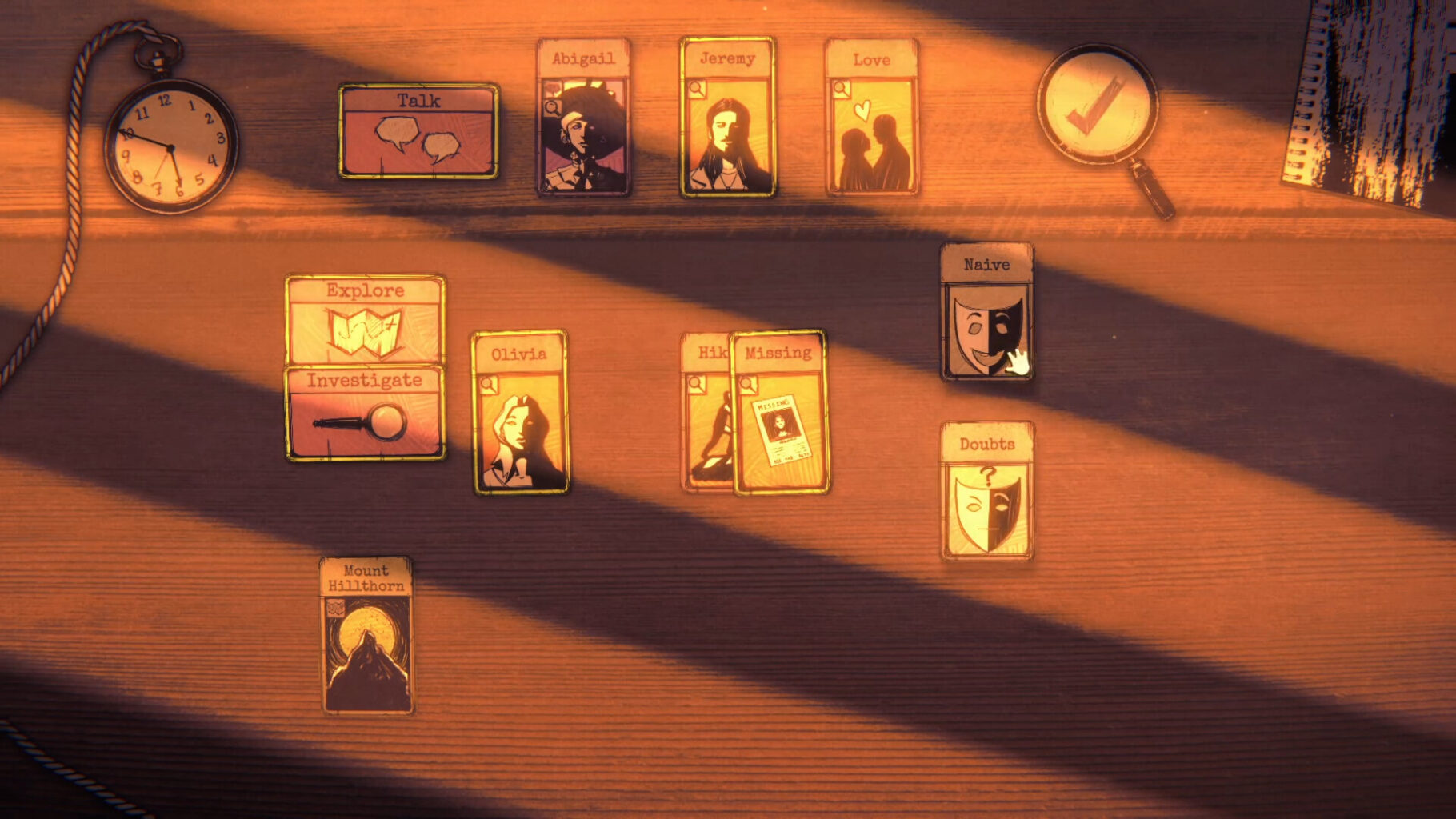
The second argument concerns time. Official features pair a clock that advances with actions, multiple endings, and knowledge as progression. Read together, they suggest that investigation may be about improving later decisions rather than checking every lead successfully on a single attempt. The wording does not settle whether time also advances while the player is idle, nor does it describe exactly what survives a return or restart. Those details should remain open rather than being filled in with assumptions about other time-loop games.
There is room here to change what failure means. An inquiry that does not solve the case can still reveal which lead deserves priority next time. In such a structure, the reward is a revised judgment in the player’s mind rather than simply a higher statistic. The clock becomes a way of assigning weight to choices: spending time on one possibility means declining another. Knowledge acquires practical value because it can alter the order in which future investigative resources are spent. That is the causal connection behind our interpretation.
For this to feel like learning, however, players need to understand something about why their earlier hypothesis failed. Repeating familiar steps must also avoid imposing a disproportionate cost. If a deadline arrives without useful feedback, a second attempt may reproduce confusion rather than demonstrate progress. Multiple endings similarly matter most when their differences can be related to a player’s decisions. Announcing those features establishes an intention; it does not prove that the balance between discovery and repetition has been achieved.
This distinction is useful even for readers who generally dislike time limits. Being hurried while thinking is not the same demand as deciding which action is worth its cost. The official reference to time spent through actions gives prospective players something specific to investigate. The demo is an opportunity to examine idle behavior, failed interactions and restarting, rather than assuming all clocks create the same pressure. Asking what time is paid for provides a more meaningful basis for judging personal fit than treating a deadline as a complete description of pace.
What to check in the demo, and what remains uncertain
Steam offers a free demo, described as covering some locations, puzzles and an overview of the loop. It can provide an entry point for checking whether interaction and organization are comfortable. Its language information needs caution: the language table lists thirteen languages including Japanese, while the descriptive text still says English and French. We could not resolve that inconsistency from the November 11 source check, and consequently do not promise Japanese support in the demo. The full game’s language listing is a separate observation. Official demo page
Before rushing toward an answer, a prospective player could pause after one interaction to compare an initial expectation with what was actually learned. Being able to explain that change helps distinguish enjoyable uncertainty about a case from confusion about controls. If it remains unclear, asking which kind of uncertainty caused the problem is more informative than simply counting solved puzzles. Even an unfinished demonstration can then reveal something about the kind of investigative reasoning a player wants to spend time on.
The full product’s mature-content description mentions drugs, violence, alcohol and suicide, represented through card artwork. A restrained visual format should not be mistaken for a guarantee of light subject matter. We have also not compared prices across platforms: readers should check their own regional storefront for language, device requirements and current cost. A limited demo cannot establish the final game’s overall length or difficulty, and an appealing design explanation cannot replace testing how clearly its feedback communicates cause and consequence.
Hillthorn is worth following because it asks how much investigative responsibility can be transferred to the player when explicit explanation is reduced. If silence supports interpretation and the clock gives priorities meaning, a compact set of expressive tools could sustain a dense detective experience. If those systems instead obscure the distinction between a bad hypothesis and an invalid input, the same restraint could frustrate. The most revealing question is consequently not how many endings exist, but what a player can learn from one unsuccessful attempt before making the next decision.