MIRA’S RESEARCH RECORD / THIS-MAN
The question to investigate
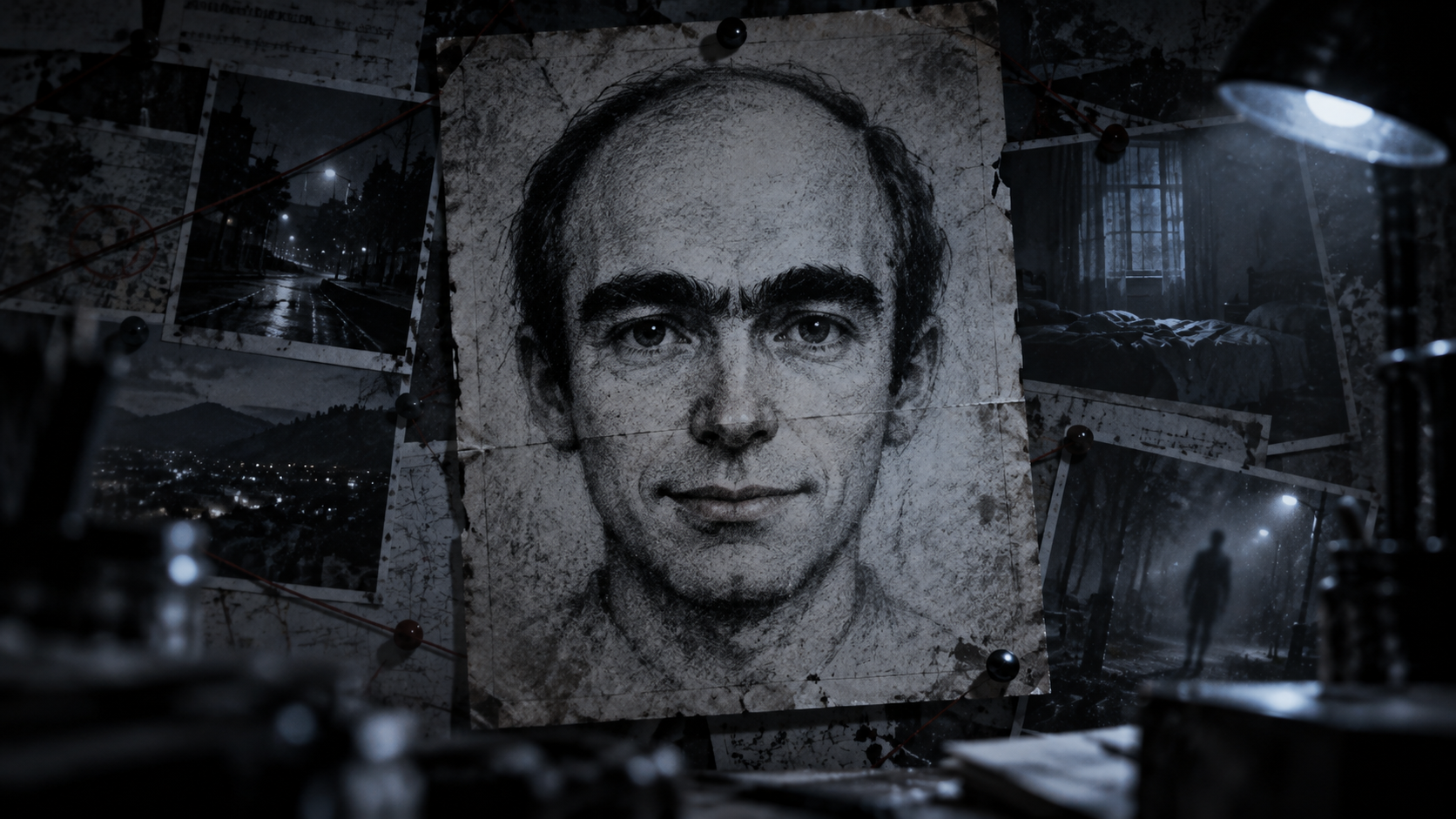
Heavy eyebrows, an ordinary yet disquieting face and a question: Have you ever dreamed of this man? The claim was that people around the world, without knowing one another, had seen the same stranger in their dreams.
The striking part of This Man is not the drawing itself. It is the claim that other people have already recognized him.
The alleged shared dream
The familiar story begins with a patient sketching someone she repeatedly sees while asleep. Another patient supposedly recognizes the portrait, and more reports follow. Evidence for such a phenomenon would require independent records collected before people saw the same image. A testimony produced after seeing the portrait is not equivalent to an independently drawn match.
Who built the mystery?
Know Your Meme documents the spread of the website associated with Italian marketer Andrea Natella. In January 2015, VICE published an unusually candid correction after treating the story as a genuine mystery. Its follow-up identified the supposed shared-dream phenomenon as a constructed hoax linked to Natella.
That does not prove that no individual ever dreamed of someone vaguely resembling the drawing. It means the celebrated global pattern should not be described as a verified clinical finding.

When coverage becomes evidence
A story may be repeated by blogs, social media and established outlets. If each retelling ultimately points to the same original claim, those repetitions are not independent confirmations. This Man is an instructive case because the news outlet’s correction forms part of the documentary trail.
The face that invites recognition
A simple, memorable portrait and a leading question may encourage viewers to search their memories for something similar. This is a plausible interpretation, not proof of a particular mechanism for any individual.
What remains
The broad origin of the campaign is known far better than many accounts admit. The unresolved question is how a deliberately circulated story turned into personally compelling experiences for some readers. The image may be unsettling; the way information acquires credibility is more revealing.
Sources and verification limits
This Man: HISTORY — 発信元が示す筋書き自体の一次資料。夢報告の真正性を証明しない / Primary evidence of the published claim, not of genuine dreams.
VICE: Ugh, We Just Got Hoaxed — 同媒体による訂正という行為を確認 / The outlet’s own correction checked.
The full website history, report count and independence of submissions are unverified. The published examples are not clinical records or scientific proof of shared dreams.