MIRA’S RESEARCH RECORD / CICADA-3301
The question to investigate
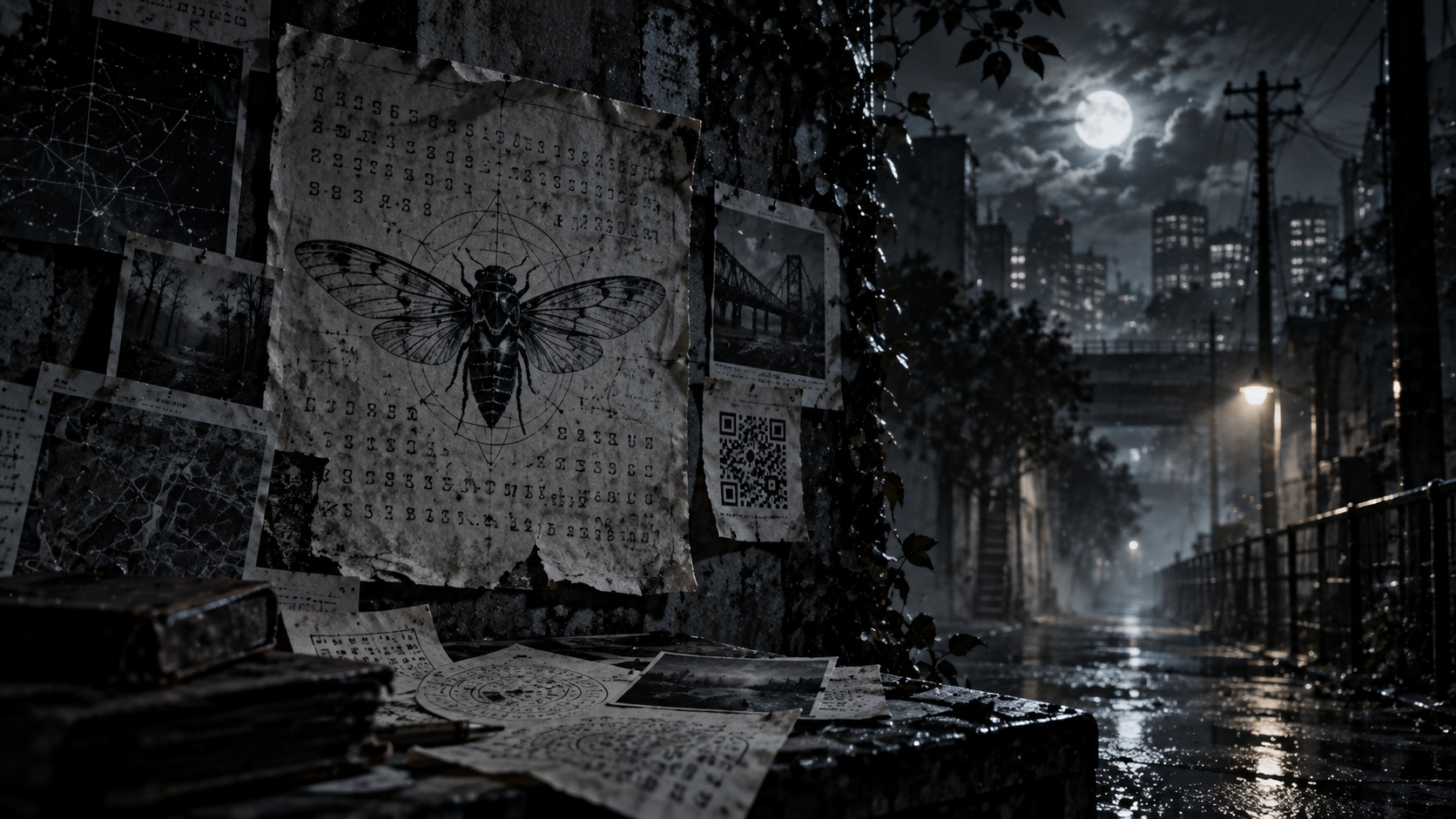
In January 2012, an image marked with a cicada and the number 3301 appeared online. Its anonymous author claimed to be seeking highly intelligent individuals. Solvers found hidden data in images, followed cryptographic clues, consulted literature and eventually encountered reports of QR-code posters in real cities.
A documented puzzle, not a supernatural sighting
The cryptographic trail exists in archived material. The first public round is dated January 4, 2012, followed by major rounds in 2013 and 2014. Unlike a ghost story, many steps can be checked as files, codes and solver notes.
What remains unsolved
The document known as Liber Primus, associated with the 2014 sequence, is only partly understood according to the solver community. Calling the entire affair simply “solved” or “unsolved” hides an important distinction: some clues were decoded, while the complete text and the identity of its authors remain obscure.
A signature is not a name
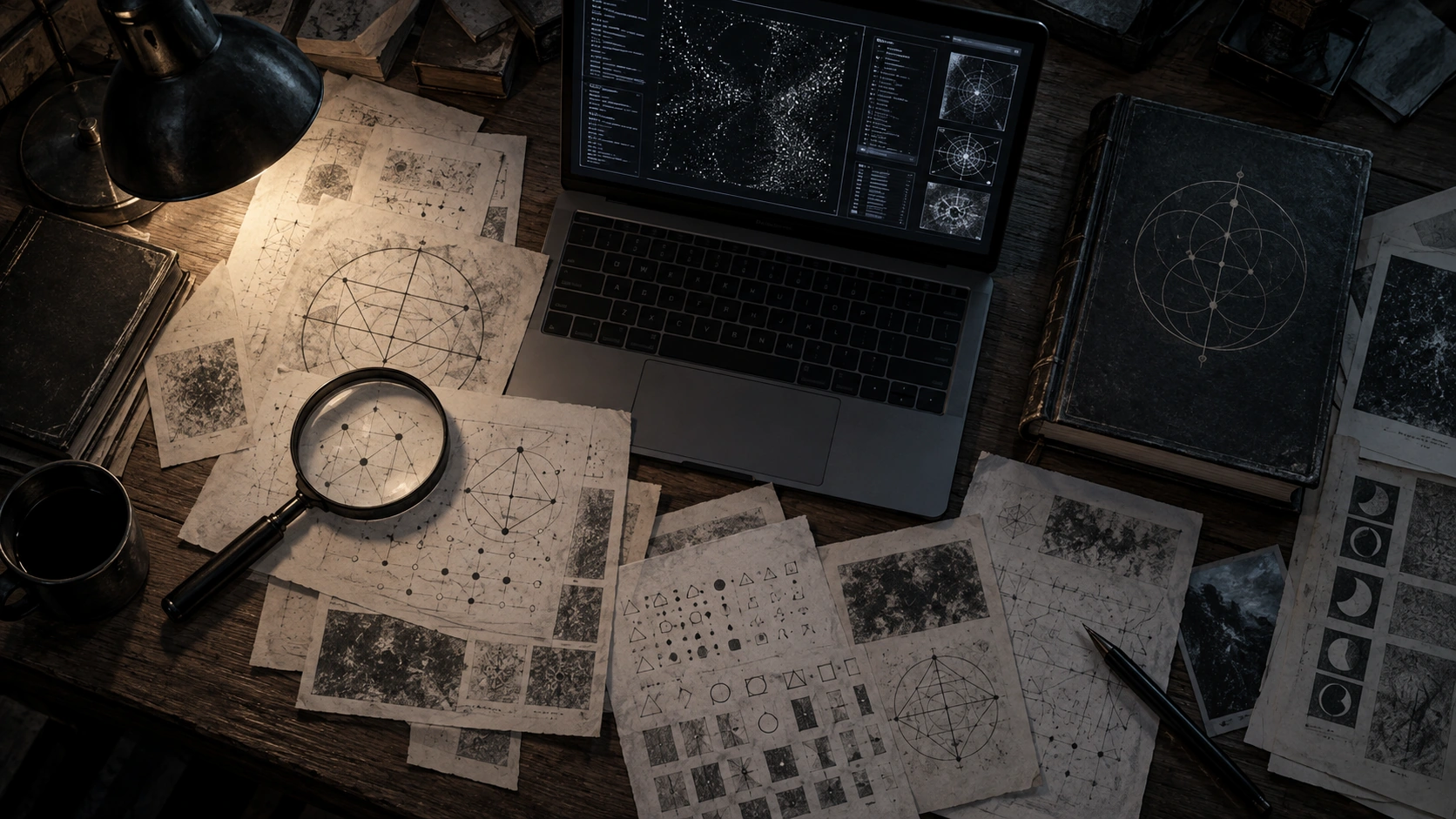
PGP digital signatures were used to distinguish communications associated with a particular key from imitations. A signed 2017 message warned about unsupported puzzles. Yet cryptographic continuity does not identify a person. It tells us which key was used, not who physically controlled it.
Theories are not evidence
Intelligence recruitment, a private cryptography collective and a collaborative artwork have all been proposed. The claim of recruitment appears in the opening material; the identity of an employer or institution does not. Former participants’ accounts may illuminate their experience without proving the anonymous group’s overall purpose.
The remaining question
For Mira, the intriguing feature is the line between a solvable cipher and an unanswerable question about its maker. The artifacts are public. Their author remains out of reach.
Sources and verification limits
Cicada Solvers: public archive — READMEと年別の資料構成を確認。全収録物の暗号検証は未実施 / README and year organization checked, not every artifact cryptographically verified.
The collection is a solver reconstruction, not an independent verification of every signature. It does not establish the organizers, their purpose or a complete solution to Liber Primus.